

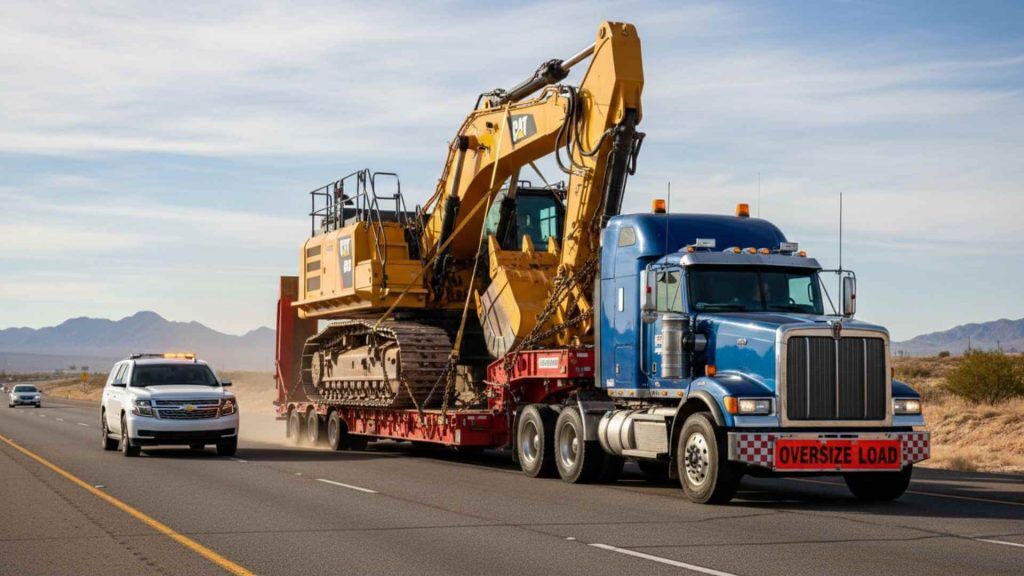
Not every load fits on a standard flatbed. Some equipment weighs over 100 tons and stretches beyond legal road limits—requiring specialized permits, multi-axle trailers, escort vehicles, and route engineering that most carriers can’t handle. This is where trucking heavy haul services become essential.
From wind turbine blades spanning 200 feet to mining trucks weighing 150,000 pounds, heavy haul logistics operates at the intersection of engineering, compliance, and precision execution.
Industries across construction, energy, manufacturing, and infrastructure depend on these specialized transport capabilities—and understanding what qualifies as “heavy haul” separates successful project planning from costly delays.
Explore specialized heavy machinery shipping for complex industrial and construction equipment moves.
What Qualifies as Heavy Haul Equipment?
Before diving into equipment types, it’s critical to understand what legally defines heavy haul transport. Standard freight operates within these limits:
- Weight: Maximum 80,000 lbs gross vehicle weight on interstate highways
- Width: 8.5 feet without permits
- Height: 13.5-14 feet depending on state
- Length: 48-53 feet for standard trailers
When equipment exceeds any of these dimensions or weight thresholds, it requires specialized trucking heavy haul services with oversize and over-limit weight permits, route surveys for clearance verification, and often police or pilot car escorts. Consequently, multi-axle trailers distribute weight across more contact points to meet bridge load ratings and road surface limits.
The distinction between “oversized” (dimension violations) and “exceeds weight limits” (weight threshold violations) matters because permit requirements differ—though many heavy haul shipments exceed both simultaneously. For cross-border moves between Canada and the US, inland logistics coordination handles the multi-jurisdiction permit complexity seamlessly.
Construction Equipment Transported by Trucking Heavy Haul Services
Construction sites run on equipment that’s too large and heavy for conventional transport.
Excavators (25-200 tons):
- Require lowboy trailers with proper weight distribution
- Prevent tipping during loading and transit through careful planning
- Range from compact units to massive mining-scale machines
Bulldozers & Track Loaders:
- Tracks often extend 10-12 feet across
- Trigger oversize permits and escort requirements
- Width presents bigger challenge than weight in many cases
Mobile Cranes:
- Among the most complex heavy haul loads
- Boom sections, counterweights, and chassis ship separately due to weight concentration
- Single crawler crane can exceed 300 tons assembled
- Require specialized heavy equipment hauling expertise for safe rigging and transport
Route planning challenges: A 14-foot-tall excavator on a 3-foot lowboy deck clears most overpasses. Add another 6 inches and you’re rerouting through rural highways to avoid infrastructure conflicts.
Industrial & Manufacturing Machinery
Manufacturing facilities relocate or upgrade equipment that wasn’t designed to move once installed.
Industrial Presses (40-80 tons):
- Require vibration isolation during transport
- Any misalignment during shipping can render machinery inoperable
- Mishandling triggers costly recalibration
CNC Machines & Precision Equipment:
- Demand climate-controlled transport for long distances
- Temperature fluctuations affect metal tolerances measured in microns
- Ocean freight provides controlled environment for protecting million-dollar machinery
Electrical Transformers (50-400 tons):
- Among the heaviest regular heavy haul shipments
- Transformer oil adds environmental compliance layers
- Spill containment protocols and hazmat certification become mandatory
Energy Sector Equipment: The Most Challenging Heavy Haul
Energy infrastructure drives some of the most extreme trucking heavy haul services demand.
Wind Turbine Blades (200+ feet long):
- Longer than the wingspan of a Boeing 747
- Require specialized extendable trailers
- Need route surveys to identify turn radius limitations
- Often demand nighttime transport windows to minimize traffic disruption
Wind Tower Sections:
- Diameter reaches 15-18 feet
- Each section weighs 30-50 tons
- Stacking three sections per site means coordinating multiple heavy haul loads
- Tight construction timelines where delays cascade into six-figure costs
Remote Energy Projects:
For offshore wind staging or solar farm installations in remote regions, air freight solutions sometimes move critical components when ground routes are inaccessible or project timelines justify the premium.
Oil & Gas Drilling Rigs:
- Require modular transport approach
- Derricks, mud pumps, and drill pipe sections each demand separate coordination
- Projects typically operate far from major highways
- Rural route planning becomes essential
Mining & Agricultural Equipment
Mining Haul Trucks (150,000+ lbs empty):
- Used in open-pit mining operations
- Weight doesn’t include truck bed, tires, and drivetrain components
- Often ship partially disassembled
- Even individual components require specialized multi-axle trailers
Agricultural Combines & Harvesters:
- Present seasonal demand spikes during harvest season
- Tight delivery windows where delays directly impact farm revenue
- Modern combines stretch 30+ feet wide with headers attached
- Require careful route planning through rural areas with narrow bridges
- Sharp county road turns weren’t designed for 35-foot-wide loads
Structural & Project Cargo
Bridge Beams (100-150 feet long):
- Weigh 40-70 tons each
- Length creates turning radius challenges (width isn’t the issue)
- Require police escorts and temporary traffic control at intersections
Prefabricated Building Sections:
- Increasingly common as construction timelines compress
- Fully assembled modular classroom or medical clinic: 60 feet long by 14 feet wide
- Within length limits but exceeding width restrictions
- Trigger permit requirements and escort coordination
Industrial Storage Tanks:
- For refineries, chemical plants, and water treatment facilities
- Can reach 20 feet in diameter
- Require specialized saddle-style trailers
- Highway overpasses, utility lines, and traffic signals all become clearance obstacles
Specialized Trailers Used in Trucking Heavy Haul Services
Equipment type dictates trailer selection. Professional trucking heavy haul services maintain diverse fleets to match load requirements:
Lowboy Trailers (30-60 ton capacity):
- Keep cargo low to the ground (18-24 inches off pavement)
- Maximize overhead clearance for tall equipment
- Critical for excavators and cranes
Removable Gooseneck (RGN) Trailers:
- Allow equipment to drive or roll onto the deck
- Eliminate crane loading requirements
- Ideal for tracked equipment where lifting creates rigging challenges
Multi-Axle Modular Trailers:
- Distribute extreme weights (200+ tons) across 12, 16, or 20 axles
- Feature hydraulic suspension for real-time load balancing
- Prevent bridge damage and road surface failures
Extendable Flatbeds:
- Handle length extremes like wind blades and bridge beams
- Telescoping design extends from 50 to 100+ feet
- Include rear steering dollies for turn radius control
Challenges in Moving Heavy Equipment
Professional trucking heavy haul services navigate obstacles that generic freight carriers can’t handle.
Permit Approval Timelines:
- Vary dramatically by state
- Some states: 48 hours processing
- Others: 10-15 business days required
- Project schedules must account for this variability
Bridge Weight Ratings:
- Determine entire route selections
- A bridge rated for 40 tons on the direct route forces a 50-mile detour
- Route surveys identify these constraints before trucks roll
Weather Creates Operational Windows:
- Wind restrictions ground wind turbine blade transport when sustained speeds exceed 25 mph
- Winter ice limits some routes entirely
- Moving a 200-ton transformer can require weeks of weather monitoring
Reality check: Moving a 200-ton transformer across three states requires weeks of planning before wheels even turn.
Safety & Compliance in Trucking Heavy Haul Services
Regulatory compliance separates professional operators from liability risks.
DOT Regulations:
- Mandate specific load securement standards
- Chain grades, strap ratings, and tie-down spacing follow precise formulas
- Based on cargo weight and center of gravity calculations
Insurance Coverage Requirements:
- Heavy haul typically requires $2-$5 million in liability minimums
- Standard freight carrier coverage at $100,000 won’t cover a $3 million CNC machine
- Verify coverage specifics before equipment leaves the origin facility
Escort Vehicle Requirements:
- Depend on dimension violations
- Rear escorts for length exceedances
- Front escorts for width violations
- Sometimes both plus police escorts for extreme loads
- These are permit conditions—not optional suggestions
Professional Trucking Heavy Haul Services You Can Trust
Moving oversized equipment that exceeds standard weight limits isn’t general freight—it’s specialized logistics that demands engineering expertise, regulatory knowledge, and operational precision.
Whether you need:
- Heavy equipment hauling across regional corridors
- Comprehensive heavy machinery shipping for international projects
- Inland transport coordination for multi-jurisdiction moves
- Ocean freight for international equipment moves
- Air freight when project timelines demand it
GFFCA coordinates the full logistics chain—the right partner makes the difference between on-time delivery and costly delays.
Some loads require more than muscle—they require engineering, compliance expertise, and the kind of operational precision that only comes from moving 100-ton equipment regularly. That’s what separates trucking heavy haul services from standard freight.

