

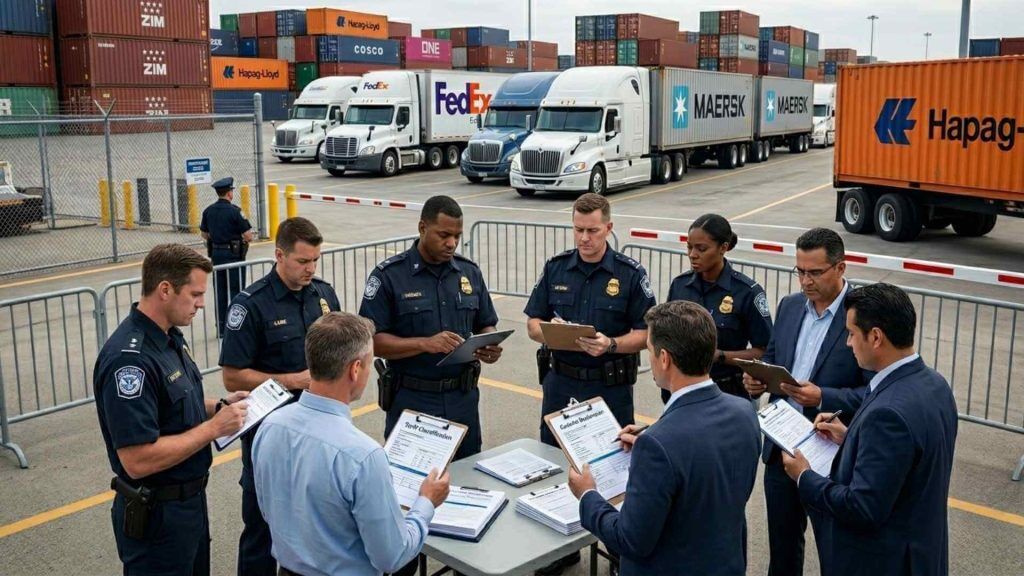
The week of February 24, 2026, delivered three shockwaves to the global logistics industry. A Supreme Court ruling threw tariffs into chaos, the world’s largest logistics software provider announced 2,000 layoffs to fund AI expansion, and two major ocean carriers confirmed a defensive merger to survive structural overcapacity.
If you’re running operations at a freight forwarding company right now, these aren’t abstract developments—they’re immediate operational realities reshaping how cargo moves, how much it costs, and what systems handle it. Here’s what happened and what it means.
1. The “Tariff Big Bang”: Supreme Court Strikes Down Emergency Duties
On February 20, 2026, the U.S. Supreme Court ruled against the administration’s use of the International Emergency Economic Powers Act (IEEPA) to impose broad tariffs. By February 24, U.S. Customs and Border Protection (CBP) stopped collecting these duties entirely.
Major forwarders—FedEx leading the charge—immediately filed lawsuits seeking full refunds for duties paid during 2025–2026. However, the victory was short-lived. Just one day later, on February 23, a new 10% global import duty was proclaimed, effective immediately.
What this means for freight forwarding companies:
- Landed cost calculations from the past 18 months are now legally contestable
- Immediate recalculation required for all active shipments and quoted pricing
- Customs compliance teams are scrambling to determine which duties apply retroactively
- Client communication has become critical—shippers are demanding clarity on refund timelines
The tariff environment went from predictably difficult to outright chaotic in 72 hours. For companies managing cross-border freight, particularly those using ground transportation for time-sensitive cross-border moves, the compliance burden just spiked significantly.
2. WiseTech Global Cuts 2,000 Jobs to Fund AI Pivot
WiseTech Global—the company behind CargoWise, used by most of the world’s top 25 freight forwarding companies—announced this week it’s cutting approximately 2,000 jobs (29% of its workforce) over the next two years.
The reason? An aggressive pivot toward AI-integrated logistics. The U.S. cloud division and E2open are taking the hardest hit, with reports suggesting cuts up to 50% in some sectors.
The strategic bet: Move from visibility tools to autonomous execution, where AI handles routine documentation and customs filing for the 75% of global customs data flowing through their systems.
What changes for forwarders:
- Documentation workflows will increasingly automate through AI-powered customs filing
- Human compliance teams may shift from data entry to exception handling
- Smaller forwarders without CargoWise access face a growing competitive gap
- Expect pricing pressure as AI reduces per-shipment operational costs for platform users
This isn’t speculative. WiseTech is betting $400M+ in cost savings that AI can replace manual freight operations at scale. The freight forwarding companies that integrate these tools first gain material cost advantages over those who don’t.
3. Red Sea Crisis Meets Carrier Consolidation: Hapag-Lloyd Acquires ZIM
Two major developments on the ocean freight side converged this week. First, carriers in the Gemini Cooperation (Maersk and Hapag-Lloyd) began transitioning select services back through the Suez Canal using naval assistance. If this expands, global effective capacity increases significantly—and rates drop accordingly.
Second, Hapag-Lloyd confirmed its acquisition of ZIM in a defensive move against what the industry is calling “structural overcapacity” for 2026. Fleet growth is forecast at 5% while demand projections sit at just 1.5%–3%.
Why this matters now:
- Ocean freight rates, which spiked 300%+ during Red Sea diversions, are poised to fall if Suez routes stabilize
- Carrier consolidation reduces shipper negotiating leverage as fewer players control capacity
- Forwarders need to lock in contracts quickly before pricing power shifts back to carriers post-merger
- Overcapacity could trigger a rate war in Q2–Q3 2026 if demand doesn’t match fleet expansion
For freight forwarding companies managing client ocean volumes, this is a short window to renegotiate contracts before the competitive landscape solidifies.
What This Week Means for Your Operations
Three unrelated developments—tariff rulings, AI-driven restructuring, and carrier mergers—all point to the same conclusion: the freight forwarding industry is compressing operational timelines and margins simultaneously.
Tariff chaos demands faster customs expertise. AI automation raises the operational baseline. Carrier consolidation reduces negotiating leverage. The companies that can adapt to all three pressures at once will separate from those who can’t.
Navigate the Chaos with Expert Freight Forwarding
Whether you’re managing tariff recalculations, optimizing cross-border ground routes, or renegotiating ocean contracts before capacity shifts reshape pricing, the right freight forwarding company makes the difference between reactive scrambling and proactive strategy.
February 24, 2026. Tariffs rewritten. AI-driven layoffs announced. Carriers consolidating. The freight forwarding industry just had one of its most consequential weeks in years—and most shippers don’t realize it yet.
