

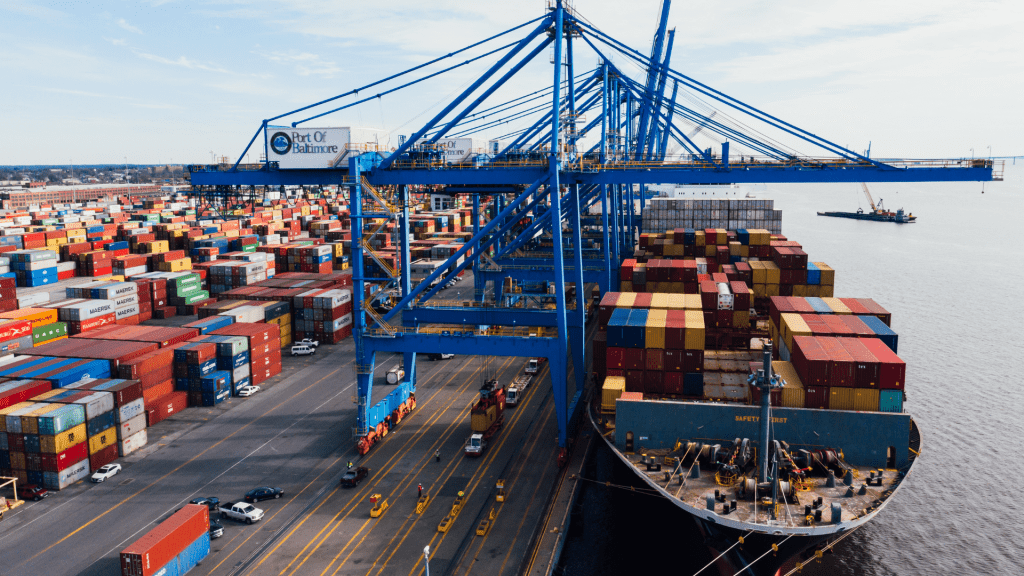
In 2026, a single customs delay can cascade into weeks of inventory shortages, missed sales windows, and angry customers. With global trade operating across multiple conflict zones simultaneously, even experienced importers are discovering that their old playbook for clearing customs no longer works.
The complexity isn’t just rising—it’s compounding. Route disruptions from the Middle East crisis. Sanctions compliance from Russia-Ukraine. Documentation scrutiny from AI-powered customs systems. For any business moving goods across borders, freight forwarding solutions have evolved from simple logistics coordination into strategic risk management.
Here’s how to navigate customs in 2026 without watching your shipments sit in bonded warehouses.
What Multi-Conflict Environments Really Mean for Your Shipments
Let’s be clear about what we’re facing. “Multi-conflict environment” isn’t corporate jargon—it’s the reality that three separate geopolitical crises are simultaneously disrupting global trade:
- Middle East Crisis: US-Israel strikes on Iran closing Strait of Hormuz, paralyzing 20% of daily oil flows
- Russia-Ukraine War: Ongoing since 2022, triggering complex Western sanctions on over 10,000 entities
- Pakistan-Afghanistan Conflict: Border closures severing Central Asian trade corridors for 100+ days
But here’s what importers aren’t grasping: these conflicts don’t just affect cargo moving through those regions. They trigger network effects that impact customs processing worldwide.
Why customs scrutiny intensifies during conflicts:
- Heightened enforcement of sanctions and export controls
- Increased cargo inspections to prevent restricted goods from reaching conflict zones
- Rerouted shipments creating documentation mismatches (manifests showing Suez route while cargo went via Cape)
- Country-of-origin verification to ensure compliance with trade restrictions
The Cost Explosion Hidden in “Routine” Customs Delays
A 5-day customs hold in 2026 doesn’t cost you 5 days. It costs you this:
Real Cost Breakdown of a 5-Day Customs Delay
| Cost Category | Impact | Estimated Cost (20ft Container) |
|---|---|---|
| Demurrage & Storage | Port storage fees accumulating daily | $150-300/day = $750-1,500 |
| Detention Charges | Container rental fees beyond free time | $100-200/day = $500-1,000 |
| Inventory Carrying Cost | Tied-up capital @ 8% annual rate | $200-400 |
| Lost Sales/Stockouts | Missed revenue during delay period | $2,000-5,000 |
| Expedited Shipping (if needed) | Air freight to compensate for delay | $3,000-8,000 |
| TOTAL IMPACT PER 5-DAY DELAY | $6,450-16,900 | |
Note: Costs vary by commodity value, seasonality, and urgency. High-value or time-sensitive goods (electronics, fashion) skew toward upper range.
And that’s for a single container. If you’re moving 10 containers per month and experiencing even 20% customs delays, you’re looking at $155,000-$406,000 in annual hidden costs.
The 5 Most Common Customs Delay Triggers in 2026
After analyzing hundreds of delayed shipments in Q1 2026, these are the patterns that keep repeating:
1. Harmonized System (HS) Code Misclassification
The problem: Customs authorities worldwide deployed AI classification systems in 2026 that cross-reference your declared HS code against product descriptions, country of origin, and historical data.
What triggers delays:
- Using outdated HS codes (2022 version vs. current 2026 revision)
- Generic descriptions that don’t match tariff classifications
- Declaring “parts” or “accessories” without specifying end-use
- HS codes that don’t align with commercial invoice product names
Real example: A Canadian importer declared “textile bags” under HS 4202.92 (travel goods). AI system flagged it because material composition (70% cotton) should classify under 4202.22. Result: 7-day exam and $2,400 in reclassification penalties.
2. Incomplete or Inconsistent Documentation
Critical document alignment in 2026:
- Commercial Invoice ↔ Packing List: Quantities, weights, and descriptions must match exactly
- Bill of Lading ↔ Manifest: Container numbers, seal numbers, shipper/consignee details identical
- Certificate of Origin ↔ Invoice: Manufacturer name and location consistent
- Import Permit ↔ HS Code: Restricted goods requiring pre-approval properly documented
A single discrepancy—like invoice showing “ABC Manufacturing Co.” while certificate of origin says “ABC Mfg Ltd.”—can trigger manual review adding 3-5 days.
3. Sanctions and Restricted Party Screening Failures
With over 10,000 entities on Western sanctions lists (Russia, Iran, North Korea, Belarus), automated screening systems are hypersensitive.
What gets flagged:
- Shipper or consignee name partially matching sanctioned entity
- Banking intermediaries in restricted countries
- Transshipment through high-risk ports (even if just passing through)
- Dual-use goods (items with civilian + military applications) without proper export licenses
Even false positives take 5-10 days to clear once flagged.
4. Valuation Disputes and Transfer Pricing Scrutiny
Customs authorities are using machine learning to detect undervaluation by comparing your declared value against:
- Historical imports of identical goods
- Market price databases
- Related-party transaction patterns (if importer and exporter are affiliated companies)
Red flags for valuation holds:
- Declared value 20%+ below market average
- Transfer pricing between related entities without proper documentation
- Missing royalty or licensing fee declarations
- Freight and insurance costs excluded from customs value (must be included for CIF)
5. Country of Origin Documentation Gaps
USMCA, CPTPP, and other trade agreements offer preferential duty rates—but only with proper certificates of origin.
Common origin-related delays:
- Certificate of Origin missing or expired (many have 12-month validity)
- Origin criteria not properly documented (product-specific rules not referenced)
- Goods claiming preferential treatment but originating from non-member countries
- Blended materials without clear origin breakdown (e.g., “Made in China using US components” requires detailed material cost analysis)
How Transit Route Changes Create Customs Nightmares
Here’s a scenario playing out daily in 2026: You book ocean freight from Shanghai to Toronto via Suez Canal. Mid-voyage, carrier reroutes via Cape of Good Hope due to Middle East conflict escalation.
The customs problem this creates:
Rerouting Impact on Customs Processing
Original Route Documentation
- Bill of Lading: “Shanghai → Suez → Montreal”
- Manifest: Transit time 30 days
- Insurance: Suez route premium
- ETA: March 15, 2026
Actual Route After Rerouting
- Actual: “Shanghai → Cape of Good Hope → Montreal”
- Actual transit: 45 days
- Insurance: Different risk zone
- Actual arrival: March 30, 2026
Result: Customs system flags documentation mismatch. Requires carrier-issued amendment, updated manifest, revised customs entry. Delay: 4-7 days minimum.
With freight forwarding solutions that lack real-time visibility, you only discover this mismatch when cargo arrives—too late to proactively resolve.
The New Compliance Landscape: What Changed in 2026
February 2026 brought sweeping regulatory changes that fundamentally altered customs clearance requirements:
AI-Powered Risk Assessment (Canada & US):
- Customs agencies now use machine learning to assign risk scores to every shipment
- High-risk scoring (based on shipper history, HS code, origin country, value anomalies) triggers automatic physical inspection
- Inspection rate jumped from 3-5% to 12-15% for first-time importers
Enhanced Carrier and Broker Vetting:
- $75,000 minimum liquid bond requirement eliminated undercapitalized customs brokers
- Non-domiciled commercial driver restrictions removed 40,000 cross-border drivers from Canada-US routes
- Customs now cross-references broker license status in real-time—invalid license = immediate hold
Source: GFFCA – 2026 Logistics Regulations Update
What this means for importers: Choosing a compliant freight forwarding solutions provider with proper bonding and technology integration is no longer optional—it’s the difference between 2-day clearance and 2-week detention.
Cost Volatility Across Multi-Conflict Trade Lanes
Beyond delays, multi-conflict environments create cost structures that change weekly. Here’s what importers faced in Q1 2026:
Surcharge Layers Impacting Total Landed Cost (Q1 2026)
Based on 40ft container, Asia to North America, Q1 2026 average. Surcharges announced with 7-14 days notice, creating budget volatility.
And this is before customs duties, brokerage fees, and inland transportation. Total landed cost predictability has collapsed.
Why Traditional Freight Forwarding Is Failing Importers
Here’s the uncomfortable truth: most freight forwarders are still operating like it’s 2019.
The old model (no longer viable):
- Book lowest-cost carrier
- Submit documents when cargo ships
- React to delays when they happen
- Blame “force majeure” for cost overruns
What modern freight forwarding solutions require:
- Proactive compliance review before cargo even leaves origin
- Real-time route monitoring with automated documentation updates when carriers reroute
- AI-assisted HS code validation to prevent classification disputes
- Sanctions screening integrated at booking stage, not at port of entry
- Multi-carrier contingency planning with pre-negotiated alternatives
The shift is from execution to strategic risk control.
7 Strategies to Eliminate Customs Delays in 2026
Strategy 1: Pre-Clearance Audits (Before Cargo Ships)
What this means: Have your freight forwarding solutions provider review all documentation 7-10 days before vessel departure.
What gets caught:
- HS code mismatches
- Missing certificates of origin
- Incomplete product descriptions
- Valuation discrepancies
- Sanctions screening gaps
Time saved: 5-7 days on average (fixing issues at origin vs. at destination port)
Strategy 2: Harmonize Documentation Across All Systems
Implement a single source of truth for all trade documents. One master file feeds:
- Commercial invoice
- Packing list
- Bill of lading
- Customs entry
- Certificate of origin
This eliminates the #1 cause of customs delays: inconsistent information across documents.
Strategy 3: Use Trade Lane-Specific Expertise
Customs requirements vary dramatically by origin. Partner with freight forwarding solutions that have specialized knowledge for your lanes:
- China to Canada imports: Anti-dumping duty expertise, Section 301 exclusion tracking, USMCA/CUSMA origin qualification
- India to Canada imports: Certificate of origin authentication, CPTPP preferential treatment, textile-specific quotas
Generic forwarders miss nuances. Specialists prevent delays.
Strategy 4: Invest in Real-Time Visibility Technology
AI adoption in supply chain management hit 68% in 2026 for good reason—it prevents surprises.
Essential technology capabilities:
- Automated route change alerts: Notification within 2 hours when carrier reroutes, with automatic documentation flag
- Customs milestone tracking: Real-time status on entry lodgement, risk assessment, inspection assignment, duty payment, release
- Predictive delay warnings: Machine learning flagging high-risk shipments 5-7 days before arrival
Strategy 5: Build Carrier and Mode Redundancy
Don’t rely on a single mode or carrier. Have pre-approved alternatives for urgent situations:
- Ocean freight primary via established carriers
- Air freight backup for critical SKUs via pre-negotiated rates
- Expedited inland solutions for last-mile urgency via trusted providers
When ocean shipment hits a 10-day customs delay, you can air freight replacement inventory immediately without scrambling for quotes.
Strategy 6: Maintain Continuous Compliance Training
Regulations changed 37 times in Q1 2026 across Canada-US trade lane alone. Your internal teams and freight partners must stay current.
Critical training areas:
- Monthly HS code update reviews
- Sanctions list monitoring (updated weekly)
- Trade agreement rule changes (USMCA review pending 2026)
- Customs automation system updates
Strategy 7: Leverage Bonded Warehouse Strategies
For high-value or frequently delayed goods, use bonded warehouse entry to defer duties and expedite physical release.
How it works:
- Goods enter Canada under bonded status (duties not yet paid)
- Physical cargo released to your warehouse within 24-48 hours
- You complete final customs entry and duty payment over 40 days
- Allows time to resolve documentation issues without cargo sitting at port
This is especially powerful for inland distribution where you’re managing inventory across multiple fulfillment centers.
How Technology Is Reshaping Freight Forwarding Solutions
The gap between tech-enabled and traditional forwarders has never been wider. Here’s what leading providers now offer:
Technology Adoption in Modern Freight Forwarding (2026)
Predictive Analytics
68%
Adoption rate among top-tier forwarders
AI Documentation
45%
Automated compliance checking
Real-Time Tracking
82%
Visibility across ocean, air, inland
Blockchain Documentation
23%
Immutable trade document verification
Real-world impact of AI-driven freight forwarding solutions:
- Classification accuracy: 99.2% vs. 87% manual HS code selection
- Documentation errors: Reduced by 76% with automated validation
- Average customs clearance time: 2.3 days (AI-assisted) vs. 5.8 days (manual)
- Delay prevention rate: 64% of potential issues caught before cargo arrives
The Financial Case for Premium Freight Forwarding Solutions
Budget forwarders look cheaper—until you calculate total cost of ownership.
12-Month Cost Comparison: Budget vs. Premium Freight Forwarding
Scenario: Importing 24 containers/year (China to Canada, mix of ocean and air)
| Cost Factor | Budget Forwarder | Premium Provider | Difference |
|---|---|---|---|
| Base Freight Fees | $48,000 | $52,800 | +$4,800 |
| Customs Brokerage | $3,600 | $4,200 | +$600 |
| Delays & Demurrage (avg 4 incidents) | $16,000 | $3,200 | -$12,800 |
| Expedited Shipping (delay recovery) | $12,000 | $2,400 | -$9,600 |
| Lost Sales (stockouts) | $24,000 | $4,800 | -$19,200 |
| Staff Time (delay management) | $8,000 | $1,600 | -$6,400 |
| TOTAL 12-MONTH COST | $111,600 | $69,000 | -$42,600 (38% savings) |
Premium providers prevent delays through proactive compliance, real-time monitoring, and AI-assisted documentation—eliminating downstream costs that budget options ignore.
The “expensive” forwarder just saved you $42,600 annually. That’s the hidden value of freight forwarding solutions built for 2026’s complexity.
Why GFFCA’s Approach Prevents Customs Delays
At GFFCA, we rebuilt our entire customs clearance process around a single principle: delays are prevented, not managed.
Our 2026 customs delay prevention framework:
1. Pre-Shipment Compliance Audit (7-10 days before vessel departure)
- AI-powered HS code validation against product descriptions
- Automated sanctions screening of all parties (shipper, consignee, banks)
- Document consistency verification (invoice ↔ packing list ↔ B/L)
- Certificate of origin requirements flagged based on trade agreements
2. Real-Time Route Monitoring & Documentation Sync
- Carrier rerouting alerts within 2 hours
- Automatic documentation amendment requests to carrier
- Customs entry updates reflecting actual routing
- No surprises when cargo arrives
3. Multi-Mode Flexibility Across Ocean, Air, and Inland
- Established relationships across ocean freight carriers
- Pre-negotiated air freight capacity for urgent situations
- Bonded warehouse and inland distribution expertise
- Ability to pivot modes when delays threaten critical timelines
4. Trade Lane Specialization
- Dedicated teams for China-Canada and India-Canada lanes
- Deep knowledge of lane-specific duty exemptions, quotas, and documentation requirements
- Relationships with origin-country customs authorities for pre-clearance when needed
5. Technology-Enabled Transparency
- Client portal with real-time customs milestone tracking
- Automated alerts for duty payment deadlines, inspection assignments, release authorization
- Document repository accessible 24/7 for customs audits
Our Q1 2026 performance metrics:
- Average customs clearance time: 2.1 days (industry average: 5.8 days)
- Delay rate: 8% (vs. 23% industry average)
- Documentation error rate: 0.4% (vs. 13% industry average)
- Client cost savings: $38,000 average per year vs. budget forwarders
The Future of Freight Forwarding in a Multi-Conflict World
The geopolitical instability that defined Q1 2026 isn’t going away. If anything, it’s accelerating.
Trends shaping the next 12-24 months:
- Permanent regionalization: Supply chains shifting from “global optimization” to “regional resilience”
- AI-customs integration: Direct API connections between forwarder systems and customs platforms eliminating manual entry
- Predictive compliance: Machine learning flagging potential issues 30+ days before cargo ships
- Blockchain documentation: Immutable trade documents reducing fraud and speeding verification
- Near-shoring acceleration: Mexico and Central America becoming primary manufacturing hubs for North American markets
The winners will be companies that treat freight forwarding solutions as strategic partners in risk management—not just commodity transportation providers.
Stop Managing Delays. Start Preventing Them.
Every day you spend managing customs delays is a day your competitors are shipping seamlessly.
The difference isn’t luck. It’s infrastructure.
What separates smooth operations from constant firefighting:
- Proactive compliance audits (not reactive fixes)
- AI-powered documentation validation (not manual review)
- Real-time visibility technology (not “we’ll check and get back to you”)
- Trade lane expertise (not generic one-size-fits-all)
- Multi-mode flexibility (not single-carrier dependency)
At GFFCA, we’ve invested millions in the technology, training, and trade lane relationships that prevent delays before they happen.
Our clients don’t call us when cargo is stuck. They partner with us so cargo never gets stuck.
Request a quote today and let us show you what freight forwarding solutions look like when prevention replaces reaction.
Because in 2026, the cost of delays isn’t just demurrage—it’s your competitive advantage disappearing while cargo sits in customs.

