

Week of April 27, 2026 | The global freight industry is entering another high-pressure week as war risk surcharges, stranded containers, tariff volatility, and AI-led orchestration reshape how shippers plan international freight.
Here’s what every importer, exporter, and logistics professional needs to know this week.
🔴 Maritime Crisis: Containers Stranded and Costs Rising
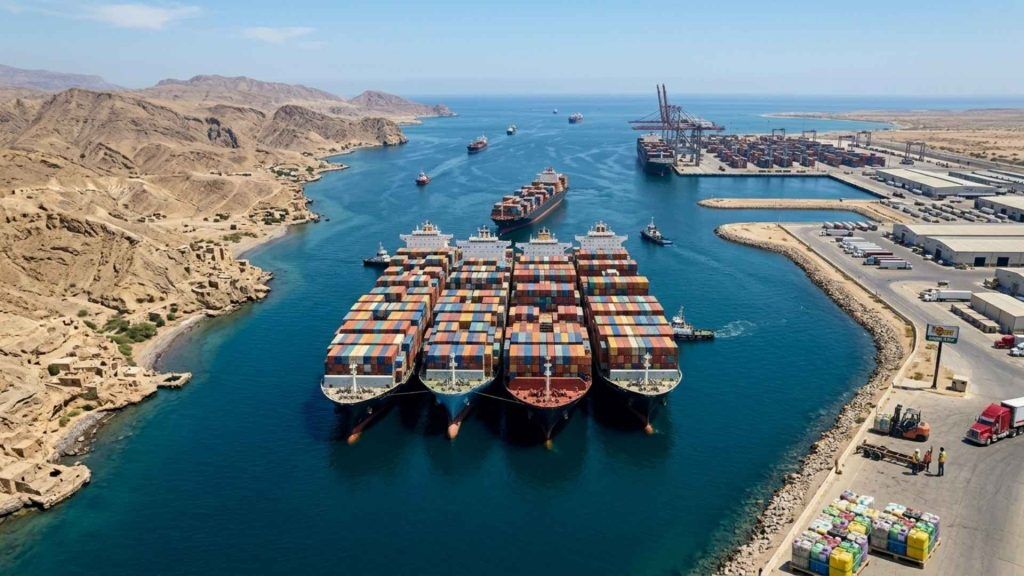
The biggest pressure point this week is coming from global shipping disruption. Exporters are reporting containers stuck at major transshipment hubs including Jebel Ali and Salalah as shipping lines suspend services, reroute vessels, and adjust capacity with limited warning.
For the global freight industry, this is no longer a one-lane problem. When major routes are disrupted, the impact spreads across ocean freight, inland trucking, warehousing, and delivery planning.
Current Shipping Pressure Snapshot
| Issue | Current Impact | Risk for Shippers |
|---|---|---|
| War Risk Surcharges | $800-$6,000/container | Sudden cost increase without enough notice |
| Cargo Value Exposure | 60-70% | Charges eating into shipment profitability |
| Transit Planning Buffer | 10-14 extra days | Longer inventory and delivery planning cycles |
The running-meter effect is the real danger. Detention and demurrage charges can build up quickly when cargo is stuck, especially for small and medium-sized exporters with limited bargaining power against large global shipping lines.
For companies using warehousing and distribution networks, flexibility is now critical. Storage, cross-docking, and inland planning can help reduce the pressure when ocean schedules change unexpectedly.
📊 War Risk Surcharges: The New Cost Shock
Shipping lines are applying war risk surcharges on affected routes, and in some cases, these charges are being introduced with little or no advance notice. This is forcing businesses to update landed cost calculations almost weekly.
Smart approach: Do not treat freight quotes as fixed in this market. Shippers need weekly surcharge reviews, alternate routing plans, and backup warehousing options. Working with GFFCA helps businesses manage these changes with more visibility and better planning.
⚡ Trade Policy: Tariff Volatility Is Changing Landed Costs
New duties and non-tariff protectionist measures are changing landed costs almost overnight. For importers and exporters, this means the cheapest supplier today may not be the most cost-effective supplier next month.
- New tariff exposure is increasing landed cost uncertainty
- Non-tariff barriers are adding more compliance pressure
- Supplier diversification is becoming a serious risk-control strategy
- Near-market production is gaining attention as companies reduce exposure to unstable lanes
The response? Businesses are expanding supplier networks, reviewing origin-country risk, and relocating production closer to major customer markets where possible.
What Shippers Are Prioritizing in 2026
Based on this week’s global freight industry planning signals.
This is where cross-docking and warehousing can support faster movement, lower storage pressure, and smoother distribution when supplier routes shift.
🌍 Global Direct: Brands Are Bypassing Risky Transit Points
Another major shift in the global freight industry is the rise of “Global Direct” fulfillment. Instead of routing orders through congested or conflict-sensitive Middle Eastern transit points, major brands are pushing direct fulfillment from international hubs such as China to destination markets.
This model is designed to reduce lead time, avoid conflict zones, and limit exposure to service suspensions. However, it also requires tighter coordination between freight forwarding, customs, warehousing, and last-mile delivery.
For businesses using value-added logistics services, this shift creates an opportunity to improve labeling, sorting, compliance preparation, and order-level handling before cargo reaches the final market.
🏗️ Industrial Corridors: Logistics Infrastructure Gets Strategic
Large infrastructure investments are also changing how freight moves. The Ganga Expressway, launching April 29, is being positioned as an Integrated Manufacturing and Logistics Cluster connecting 12 industrial nodes.
This kind of expressway-cum-industrial model shows where global trade is heading. Logistics is no longer just about ports and vessels. It is about connected industrial corridors, faster inland movement, and better manufacturing-to-market flow.
For companies moving high-volume freight, industrial corridor planning can reduce bottlenecks and improve access to production clusters, warehouses, and distribution points.
🤖 AI Goes Agentic: From Firefighting to Orchestration
The technology story this week is clear: AI is moving beyond visibility. By late 2026, the global freight industry is expected to see more agentic AI systems that can support autonomous decision-making during disruptions.
- Real-time rerouting during port closures and service suspensions
- Freight rate renegotiation support when market pricing changes suddenly
- Carrier and lane selection based on cost, risk, and transit time
- Exception management when containers are delayed or stranded
Operational Digital Twins are also gaining momentum. These systems allow supply chain leaders to simulate what happens if a port strike, fuel spike, tariff change, or routing disruption hits the network.
♻️ Sustainability: Verification Is Becoming Mandatory
Sustainability is also becoming more data-driven. Companies are adopting Digital Product Passports and blockchain-backed shipment tracking to verify environmental impact across the supply chain.
This means logistics providers will need to support stronger data visibility, not just movement of cargo. Circular logistics, shipment traceability, and verified sustainability reporting are becoming part of market competitiveness.
📉 Economic Outlook: Slower Growth and Higher Risk
The April 2026 global outlook points toward slower growth, with global expansion projected around 3.1%. Geopolitical fragmentation, port security concerns, and energy price pressure are all weighing on trade confidence.
The Middle East remains a major concern. Port disruption, energy market uncertainty, and shipping lane security risks are placing additional pressure on freight rates and planning timelines.
🎯 What This Means for Your Business
Your Weekly Action Checklist
- ✅ Review war risk surcharges weekly – Do not assume last week’s quote is still valid
- ✅ Add transit buffers – Plan 10-14 extra days for sensitive global routes
- ✅ Audit detention and demurrage exposure – Stranded containers can become expensive quickly
- ✅ Recalculate landed costs – Tariffs and surcharges can change margins overnight
- ✅ Use warehousing and cross-docking strategically – Flexibility matters when routes shift
- ✅ Start testing AI-supported planning – Digital tools can help model disruption before it hits
Partner with Freight Experts Built for 2026 Volatility
The week of April 27, 2026 proves one thing: the global freight industry is no longer predictable by default.
At GFFCA, we help businesses plan around disruption instead of reacting after costs rise:
- Flexible freight planning: Ocean, inland, warehousing, and distribution support built around changing market conditions
- Warehousing and distribution: Storage and flow control when cargo timing becomes unpredictable
- Value-added services: Labeling, documentation support, sorting, handling, and compliance preparation
- Cross-docking support: Faster cargo movement through smart transfer and consolidation options
Whether your shipment is affected by war risk surcharges, tariff volatility, stranded containers, or sudden routing changes, we help build freight plans that protect time, cost, and cargo movement.
Don’t let this week’s freight disruption become next week’s supply chain crisis. Request a quote today and see how GFFCA helps keep your cargo moving in a changing global freight industry.
💡 Next Week’s Focus: War risk surcharge updates, AI freight orchestration, tariff changes, and new logistics corridor developments. Follow our weekly freight intelligence updates for practical shipping insights.
