

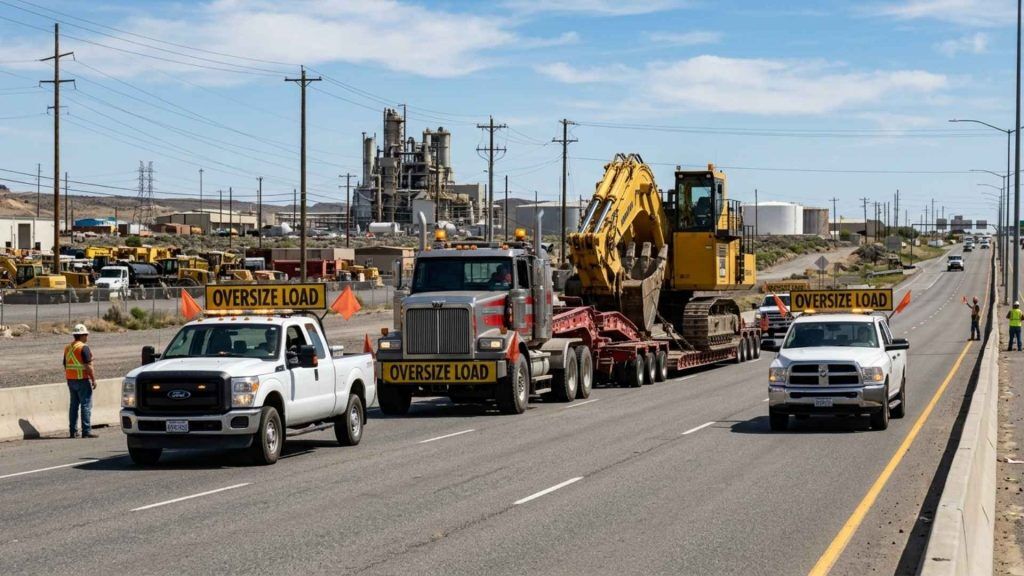
Trucking Heavy Haul Services are different from standard freight. When a shipment involves excavators, bulldozers, cranes, loaders, industrial machinery, or oversized cargo, the final price depends on much more than distance.
Many businesses compare heavy haul quotes by looking only at the base transportation rate. That can be risky. A quote that looks cheaper at the beginning may become more expensive once extra permits, route restrictions, pilot cars, waiting time, loading equipment, and delivery-site issues are added later.
For businesses moving machinery, construction equipment, or industrial cargo, the goal should not be to find the lowest number on paper. The goal should be to understand the full cost before the move starts.
At GFFCA, heavy machinery movement is planned with cost, route, timing, and documentation in mind so businesses can avoid unnecessary surprises.
Most Common
Permits & Escorts
Special route approvals, pilot cars, and escort requirements can increase the final cost.
Often Missed
Waiting Time
Delays at pickup, delivery, loading, or unloading can lead to extra charges.
Big Risk
Wrong Dimensions
Incorrect height, width, length, or weight details can change the permit, trailer, and route plan.
1. Permit and route approval charges
Heavy haul shipments often need special permits, especially when cargo exceeds standard road dimensions or legal weight limits. These permits may vary by province, state, municipality, road type, bridge route, and delivery area.
The permit cost itself is only one part of the issue. The route may also require review, approval, timing restrictions, or changes based on bridge clearance, road construction, utility lines, or local movement rules.
Hidden cost risk: If the cargo dimensions are not accurate before booking, the original permit plan may become invalid, and the shipment may require a revised route or additional approval.
2. Pilot car and escort charges
Some heavy haul moves require pilot cars, escort vehicles, or additional safety support. These requirements depend on the cargo size, route, road conditions, visibility, and local regulations.
Pilot cars help manage safety by warning traffic, checking route conditions, supporting turns, and helping the driver move oversized cargo through difficult areas. But they also add cost to the move.
For oversized machinery, escort planning should be discussed early, not added at the last minute. This is especially important for construction equipment, cranes, agricultural machinery, and industrial units.
3. Specialized trailer charges
Not all heavy cargo can move on the same trailer. Depending on the equipment, the shipment may require a step deck, lowboy, removable gooseneck trailer, extendable trailer, multi-axle trailer, or other specialized equipment.
If the wrong trailer is selected, the shipment may face loading problems, height restrictions, safety issues, or re-dispatch charges.
This is why experienced heavy machinery shipping support matters. The right trailer choice protects the equipment, the route plan, and the final cost.
Basic Quote
Looks cheaper at first
- Limited route review
- Unclear permit cost
- Trailer type not confirmed
- Escort charges added later
Proper Heavy Haul Plan
More accurate from the start
- Dimensions reviewed
- Route checked
- Permit needs identified
- Equipment matched to cargo
4. Loading and unloading equipment charges
Heavy haul shipments may need cranes, forklifts, ramps, rigging teams, winches, or specialized loading support. If the machinery is not self-propelled or the site does not have the right equipment, extra charges can appear quickly.
Pickup and delivery teams should confirm loading method before dispatch. A truck arriving at a site without proper loading equipment can create waiting time, failed pickup, or rebooking costs.
5. Waiting time and detention charges
Waiting time is one of the most common hidden charges in heavy haul trucking. This can happen when the equipment is not ready, the site is blocked, loading crews are late, permits are not finalized, or the delivery location cannot receive the cargo.
Heavy haul trucks and specialized trailers are expensive to keep idle. If the driver waits beyond the allowed free time, the extra cost may be added to the final invoice.
Before dispatch, confirm:
6. Route change and re-routing costs
Heavy haul routes are not always flexible. A standard truck may be able to take an alternate road quickly, but oversized cargo may be restricted by bridge clearance, road width, utility lines, construction zones, or local timing rules.
If the planned route changes after dispatch, extra mileage, permit revisions, escort changes, or scheduling delays may increase the total cost.
For businesses moving machinery across long distances, proper inland solutions can help connect route planning, trucking, permits, and delivery coordination more effectively.
7. Site access and delivery restriction charges
Heavy machinery is often delivered to construction sites, industrial yards, farms, mines, ports, or project locations. These sites may have rough ground, narrow entrances, limited turning space, security requirements, or restricted delivery hours.
If access is not checked before delivery, the carrier may need extra time, different equipment, a revised delivery plan, or a second delivery attempt.
Site access planning should include entrance width, ground condition, unloading area, turning radius, crew availability, safety requirements, and the exact delivery location inside the site.
8. Insurance and cargo value considerations
Heavy machinery can be extremely valuable. A basic freight quote may not always reflect the cargo value, insurance needs, or risk exposure of the move.
Businesses should confirm what coverage is included, what limits apply, and whether additional cargo protection is needed. This is especially important for expensive machines, specialized equipment, or time-sensitive project cargo.
Heavy haul hidden charge checklist
- Special permits and route approvals
- Pilot cars or escort vehicles
- Specialized trailer requirements
- Loading and unloading equipment
- Waiting time at pickup or delivery
- Route changes or permit revisions
- Site access limitations
- Weekend, night, or restricted-hour movement
- Fuel surcharge and toll exposure
- Additional cargo value protection
How to reduce hidden charges before booking
The best way to reduce hidden charges is to provide accurate shipment details before the quote is finalized. Businesses should share the exact machine make and model, dimensions, weight, pickup address, delivery address, loading method, unloading method, and site access details.
Photos of the equipment and pickup location can also help the planning team identify potential issues before dispatch.
For more detailed machinery movement planning, businesses can also review GFFCA’s heavy machinery shipping construction equipment guide.
Conclusion
Hidden charges in Trucking Heavy Haul Services usually appear when the shipment is not planned properly. Permits, escorts, specialized trailers, loading support, waiting time, route changes, and site access can all affect the final cost.
The cheapest quote is not always the best quote. A strong heavy haul plan should explain what is included, what may change, and what details are needed before the truck moves.
For heavy machinery, construction equipment, and oversized cargo, better planning helps protect your cost, timeline, and cargo safety.
Plan the move before the cost changes
Need support with heavy haul trucking or machinery transport?
Get help with heavy machinery shipping, route planning, equipment coordination, and freight cost visibility.

