

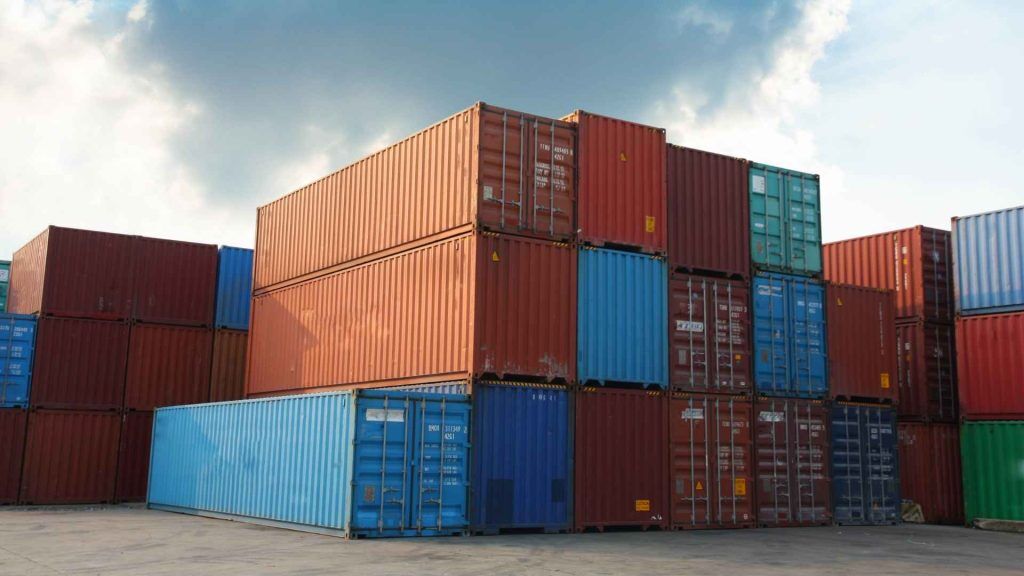
Ocean Freight | Container Weight Guide
Understanding the Weight of Shipping Containers
Learn how shipping container weight is calculated, what tare, gross and payload mean, and why accurate weight information matters for ocean freight, trucking, rail transportation and regulatory compliance.
Shipping containers are central to global trade. They carry manufactured goods, machinery, vehicles, retail inventory, raw materials and countless other products across oceans and continents.
However, choosing a container involves more than checking whether the cargo will fit inside. Businesses must also understand shipping container weight, including the empty container weight, cargo capacity and maximum permitted gross mass.
Incorrect weight information can lead to overweight charges, rejected equipment, unsafe lifting, transport delays, container rollovers or regulatory problems. It can also affect the choice of truck, chassis, rail service, crane and port handling arrangement.
Working with an experienced freight forwarding company can help businesses review container size, routing, cargo weight and inland transportation requirements before the shipment is booked.
Key Takeaways
- Container weight varies by size, manufacturer, equipment type and construction.
- Tare weight is the empty container weight.
- Gross weight includes the container, cargo, pallets, packaging and securing material.
- Payload is the maximum cargo weight permitted inside the container.
- A 40-foot container does not necessarily carry twice the weight of a 20-foot container.
- The container safety plate should always be checked before loading.
- Road and rail limits may be lower than the container’s structural maximum.
What Is Shipping Container Weight?
Shipping container weight can refer to several different measurements. Understanding the difference between them is important when planning loading, transportation and customs documentation.
The weight printed on a booking confirmation or commercial document may not always refer to the same measurement. One document may show the cargo weight, while another may show the full packed-container weight.
Tare Weight
Tare weight is the weight of the empty shipping container. It includes the container structure, doors, flooring and permanent fittings, but it does not include the cargo, pallets, packaging or securing material.
The tare weight is normally displayed on the container door or its safety approval plate. Because containers may come from different manufacturers and production series, two containers of the same nominal size can have slightly different tare weights.
Gross Weight
Gross weight is the combined weight of the container and everything packed inside it.
This generally includes:
- The empty container
- The cargo
- Pallets and crates
- Packaging material
- Dunnage and blocking
- Straps, chains and other securing material
Gross weight is especially important when determining whether a container can move safely by vessel, truck or rail.
Payload
Payload is the maximum amount of cargo that can be loaded into the container without exceeding its approved gross-weight limit.
The basic calculation is:
Maximum Payload = Maximum Gross Weight − Tare Weight
Payload should not be confused with container volume. A container may have plenty of unused space but still reach its weight limit when carrying dense products such as metal, stone, machinery, liquids or industrial materials.

Verified Gross Mass
Verified Gross Mass, commonly known as VGM, is the confirmed gross mass of a packed container submitted before vessel loading.
It accounts for the container, cargo and all packing and securing materials inside it. VGM is used to support safe vessel planning, container stacking and cargo handling.
Standard Shipping Container Sizes and Their Weights
The two most commonly used dry-container sizes are the 20-foot standard container and the 40-foot standard container. High-cube containers provide additional height for voluminous cargo.
The figures below are general planning ranges. They should not replace the specifications shown on the actual container or provided by the carrier.
| Container Type | Typical Tare Weight | Common Planning Use |
|---|---|---|
| 20ft Standard Dry | Approximately 2,200–2,400 kg | Dense cargo and smaller-volume shipments |
| 40ft Standard Dry | Approximately 3,700–4,000 kg | Higher-volume general cargo |
| 40ft High Cube | Approximately 3,800–4,200 kg | Bulky, lightweight or high-volume cargo |

These ranges can change according to manufacturer, flooring, door design, structural reinforcements and equipment age. The safest practice is to check the markings on the assigned unit.
Businesses moving larger shipment volumes can review GFFCA’s FCL shipping services in Canada for full-container planning and international freight coordination.
When the shipment does not require an entire container, LCL shipping may provide a more flexible option by allowing cargo to share container space.
How Much Does a 20ft Shipping Container Weigh?
A standard 20-foot dry container commonly has a tare weight of approximately 2,200 to 2,400 kg, or roughly 4,850 to 5,300 pounds.
A representative carrier container may have a maximum gross weight near 30,480 kg, although the exact limit can vary by equipment series and operating route.
Because a 20-foot container offers less cubic capacity than a 40-foot container but can have a comparable structural gross limit, it is often used for dense cargo.
Common examples include:
- Metal products
- Machinery and equipment
- Stone and tile
- Paper products
- Industrial materials
- Bagged commodities
Dense cargo requires careful load distribution. Reaching the permitted payload does not automatically mean the container will meet every local road, axle or rail limitation.
How Much Does a 40ft Shipping Container Weigh?
A standard 40-foot dry container commonly has an empty weight of approximately 3,700 to 4,000 kg, or around 8,150 to 8,820 pounds.
Although it provides nearly twice the internal length of a 20-foot container, its permitted payload is not necessarily twice as high.
This makes a 40-foot container particularly useful for goods that occupy more space before reaching the maximum weight, such as:
- Furniture
- Clothing and textiles
- Retail goods
- Packaged consumer products
- Plastic products
- Lightweight manufactured goods
Businesses importing or exporting through Ontario can review GFFCA’s ocean freight services in Toronto. Quebec-based companies can also review ocean freight services in Montreal.
High Cube and Specialty Container Weights
A 40-foot high-cube container is approximately one foot taller than a standard 40-foot container. The added structure normally makes it slightly heavier.
The main advantage of a high cube is additional cubic capacity, not necessarily a higher cargo-weight allowance.
This makes high-cube containers useful for bulky cargo that reaches the container’s volume limit before its weight limit.
Specialty containers can have significantly different tare weights:
- Refrigerated containers are heavier because of insulation and cooling machinery.
- Open-top containers have modified roof structures for top loading.
- Flat-rack containers include reinforced end frames for oversized or heavy cargo.
- Tank containers include a tank vessel and supporting frame.
- Platform containers use reinforced bases for specialized heavy loads.
Businesses moving machinery, vehicles or unusual cargo can review GFFCA’s heavy machinery shipping solutions before selecting standard or specialized equipment.
For inland movement of heavy or specialized cargo, NFFI’s heavy equipment hauling service can provide additional transportation support.
Key Weight Terms: Tare, Gross and Payload
These terms are related, but they should not be used interchangeably.
| Term | Meaning | Why It Matters |
|---|---|---|
| Tare Weight | Weight of the empty container | Used to calculate available payload |
| Cargo Weight | Weight of the goods being shipped | Used for booking, documentation and loading |
| Payload | Maximum permitted cargo capacity | Prevents the structural limit from being exceeded |
| Gross Weight | Container plus cargo and packing materials | Affects vessel, truck, rail and handling limits |
| VGM | Verified gross mass of the packed container | Required before vessel loading |
Factors That Affect Shipping Container Weight
Not every container of the same size weighs exactly the same. Several factors can change the tare weight and available payload.
Container Material
Most modern dry containers are manufactured primarily from steel. However, the design, steel thickness, flooring and reinforcement system can vary between manufacturers.
Container Type
Refrigerated, open-top, tank and flat-rack containers include additional structures or equipment that affect tare weight.
Structural Reinforcements
Equipment designed for heavier cargo may contain stronger flooring, frames, corner posts or securing points. These additions can increase the empty weight.
Permanent Equipment
Refrigeration machinery, insulation, ventilation systems and tank fittings add weight and reduce the amount available for cargo.
Modifications and Repairs
Permanent modifications and structural repairs can also affect a container’s final empty weight. This is another reason to use the tare weight displayed on the assigned container rather than relying only on a general online figure.
Why Container Weight Matters in Shipping and Logistics
Container weight influences almost every stage of an international shipment.
Freight Pricing
Heavy containers may attract additional charges based on carrier rules, trade lane, terminal requirements or inland transportation restrictions.
A shipment may also need a different chassis, truck, rail arrangement or loading method when its weight exceeds standard operating limits.
Companies reviewing freight costs can use GFFCA’s free shipping audit to identify possible cost and process gaps.
Safe Load Distribution
Staying under the maximum gross weight does not automatically make a shipment safe.
Cargo must also be distributed across the container floor. Concentrating excessive weight in one area can damage the flooring, affect handling stability and create pressure beyond the equipment’s point-load limits.
Trucking and Axle Limits
A container may remain within its approved structural limit but still be too heavy for a particular road, chassis or axle arrangement.
For dedicated inland transport, NFFI’s FTL shipping service may support containerized or deconsolidated cargo requiring dedicated truck capacity.
Crated or palletized cargo removed from a container may also move through NFFI’s dry van trucking network when enclosed road transportation is suitable.
Rail Restrictions
Rail operators may apply corridor-specific weight limits. These limits can differ by container size, railway, origin ramp, destination ramp and route.
The legal or operational rail limit may be lower than the gross weight displayed on the container plate.
Port and Terminal Handling
Ports and terminals use container weights for crane planning, stack positioning and safe yard operations. Incorrect information can affect the safe handling of the entire container stack.
Regulations and Compliance: Container Weight Limits
Container weight compliance involves more than staying below one number.
A shipment may need to meet:
- The maximum gross weight shown on the container
- The carrier’s equipment and trade-lane limits
- Vessel and terminal requirements
- Local road and axle limits
- Rail corridor restrictions
- Port, bridge and chassis limitations
- Country-specific permits and transport rules
The lowest applicable limit usually controls the shipment.
When cargo is moving internationally, GFFCA’s customs brokerage services can help coordinate customs information alongside the broader transportation plan.
SOLAS Verified Gross Mass Requirement
Under international maritime safety requirements, the gross mass of a packed container must be verified before it is loaded onto a vessel.
The shipper is responsible for obtaining and communicating the VGM through the required shipping documentation.
There are two recognized approaches:
- Weigh the complete packed and sealed container using approved equipment.
- Weigh all cargo, packaging, pallets, dunnage and securing materials, then add the container’s tare weight using an approved calculation process.
The acceptable method, tolerance and certification requirements may depend on the relevant national authority.
How to Find and Verify Container Weight
Container weight should be confirmed before loading is completed, especially for dense or high-value cargo.
Check the Container Door
The container door normally displays important information such as:
- Container number
- Maximum gross weight
- Tare weight
- Maximum payload
- Internal volume
Review the Safety Approval Plate
The CSC safety approval plate contains structural and approval information for the individual container.
The figures on the assigned container should take priority over generic weight charts.
Use Certified Weighing Equipment
Packed containers may be weighed using an approved weighbridge, terminal scale or other certified weighing equipment.
Where the calculation method is permitted, every cargo item and packing component must be included.
Confirm the Inland Route
Before finalizing the load, confirm that the planned truck, chassis, rail service and delivery location can accept the full unit weight.
GFFCA’s inland transportation solutions can help connect ocean freight with ports, rail ramps, warehouses and final delivery locations.
When cargo must be unloaded, transferred or staged before final delivery, NFFI’s cross-docking and warehousing support may help manage the next stage of movement.
Common Questions About Shipping Container Weight
How much does an empty 20ft shipping container weigh?
A standard 20-foot dry container commonly weighs approximately 2,200 to 2,400 kg when empty. The precise tare weight should be confirmed on the assigned container.
How much does an empty 40ft shipping container weigh?
A standard 40-foot dry container commonly weighs approximately 3,700 to 4,000 kg when empty. Equipment specifications vary between carriers and manufacturers.
Does a 40ft container carry twice as much weight as a 20ft container?
No. A 40-foot container provides significantly more internal volume, but its maximum payload is not automatically twice the payload of a 20-foot container.
Does a high-cube container carry more weight?
Not necessarily. A high-cube container provides extra height and internal volume, but it may have a similar gross-weight limit and a slightly higher tare weight.
Where can I find a container’s tare weight?
The tare weight is usually marked on the container door and safety approval plate. Some carriers also provide online tare-weight lookup tools using the container number.
Can a container be legal for ocean transport but overweight for trucking?
Yes. The container may be below its structural maximum gross weight but still exceed local road, axle, chassis or permit limits.
What happens if the container weight is declared incorrectly?
Incorrect weight information can result in reweighing charges, overweight fees, refused loading, missed sailings, inland transportation delays or safety issues.
Conclusion: Choosing the Right Container for Your Needs
Understanding shipping container weight is essential for safe and cost-effective freight planning.
A shipper must consider more than the empty weight of a 20-foot or 40-foot container. The planning process should also account for payload, gross weight, VGM, load distribution, road limits, rail restrictions and the requirements of any special equipment.
Before loading begins:
- Confirm the assigned container’s tare weight.
- Review its maximum gross weight and payload.
- Calculate the total cargo and packing-material weight.
- Distribute the cargo safely across the container floor.
- Confirm road and rail restrictions.
- Submit the required VGM before the carrier deadline.
The right container is not simply the one with enough room. It is the container that can carry the cargo safely, legally and efficiently across every stage of the route.
Need Help Planning Your Container Shipment?
GFFCA helps businesses choose the right container, review cargo weight, coordinate ocean freight, arrange inland transportation and prepare customs documentation.

