

International Vehicle Shipping
Car Shipping from Canada to Spain: What You Need to Know
Thinking about taking your Canadian vehicle to Spain? Here is what you should know about shipping methods, taxes, customs, registration, and driving legally after your car arrives.
Moving to Spain can bring major lifestyle changes, but replacing a vehicle does not always need to be one of them.
If you already own a reliable car in Canada, shipping it to Spain may be more practical than selling it and buying another vehicle after your move. This can be especially true for a newer car, a luxury vehicle, a classic model, or a vehicle with personal value.
However, car shipping from Canada to Spain involves more than booking space on a vessel. Importers must also consider Spanish customs taxes, vehicle approval standards, the ITV inspection, registration, insurance, and the rules for driving with Canadian documents.
Therefore, it is important to look at the complete import process before deciding whether shipping your vehicle makes financial and practical sense. GFFCA’s international car shipping services can help coordinate the Canadian transportation and ocean-freight stages of the move.
Key Takeaways
- You can ship a vehicle to Spain by RoRo or container.
- Spain generally charges customs duty and import VAT on vehicles arriving from outside the EU.
- A transfer-of-residence exemption may remove certain import taxes when the requirements are met.
- A Canadian vehicle must pass customs, technical approval, ITV, and registration before permanent road use.
- Residents generally cannot continue driving a foreign-plated vehicle in Spain.
- A Canadian driving licence usually has limited validity after establishing normal residence in Spain.
Is Shipping Your Canadian Car to Spain Worth It?
Shipping may make sense when your vehicle is relatively new, fully paid for, difficult to replace, or already suitable for European driving.
Canadian vehicles also have one immediate advantage: most are left-hand drive, which matches Spanish roads. Therefore, owners do not usually face the steering-position issue associated with vehicles imported from countries that drive on the left.
Nevertheless, left-hand drive does not mean automatic approval.
A Canadian-specification vehicle may still need changes to its headlights, rear fog lights, speedometer display, emissions documentation, or other components before it can pass Spanish technical inspection.
Before shipping, compare:
- The vehicle’s value in Canada and Spain
- Ocean and inland shipping costs
- Spanish customs duty and VAT
- Possible technical modifications
- ITV and registration expenses
- Insurance availability in Spain
- The cost of buying a replacement vehicle
Businesses and individuals shipping passenger vehicles, SUVs, motorcycles, or specialty vehicles can also review GFFCA’s automotive shipping solutions.
RoRo or Container: Which Shipping Method Should You Choose?
Most vehicles moving from Canada to Spain travel through either RoRo shipping or container shipping.
RoRo Shipping
With roll-on/roll-off shipping, the vehicle is driven onto a specialized vessel and driven off after arrival.
RoRo may be suitable when the car:
- Starts, steers, and brakes properly
- Has no major fluid leaks
- Meets the carrier’s size and condition requirements
- Does not contain personal belongings
This method can be economical for a standard running vehicle. However, service availability depends on the origin, destination port, and vessel schedule.
Container Shipping
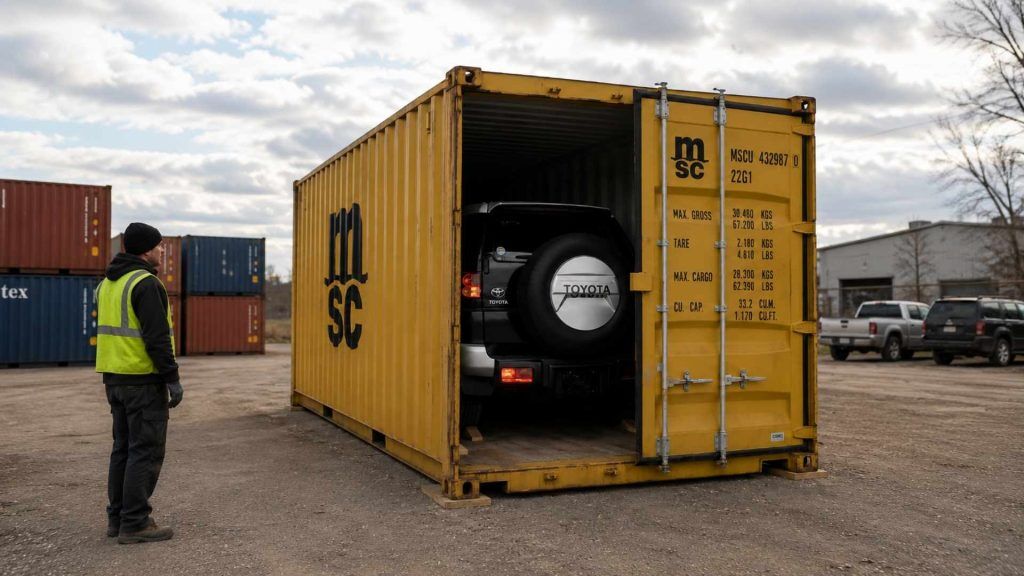
Container shipping may provide greater flexibility for classic, luxury, non-running, or high-value vehicles.
A dedicated container can also work when the owner needs to ship approved and properly declared household goods with the vehicle.
Although container service can cost more, it provides greater control over loading and cargo separation. GFFCA’s FCL shipping services can support dedicated-container shipments from Canada.
A Simple Way to Choose
RoRo may suit a standard running vehicle when a suitable sailing is available.
Container shipping may be better for valuable, non-running, modified, or combined vehicle-and-household-goods shipments.
How Much Does Car Shipping from Canada to Spain Cost?
Car shipping prices change according to the vehicle, routing, season, fuel surcharges, and shipping method.
The main cost factors include:
- Canadian pickup location
- Vehicle size and weight
- Running or non-running condition
- RoRo or container service
- Departure and arrival ports
- Warehouse loading and securing
- Marine cargo insurance
- Spanish terminal charges
- Customs duty and taxes
- Delivery from the Spanish port
Vehicles commonly move toward Spanish gateways such as Valencia, Barcelona, Bilbao, or Algeciras. However, the lowest ocean rate does not always provide the lowest total cost.
For example, a slightly higher ocean rate may create lower inland delivery and terminal expenses if the arrival port is closer to the final destination.
If the vehicle needs transportation from its Canadian location to the warehouse or port, GFFCA’s inland transportation services can help coordinate that movement.
Supporting cargo such as boxed parts, tires, or workshop equipment may also move separately through NFFI’s dry van trucking or full truckload service.
What Taxes Apply When Importing a Car into Spain?
Spain treats Canada as a country outside the European Union. Therefore, a standard vehicle import may attract customs duty, import VAT, and registration-related taxes.
Customs Duty
Spain’s general customs-duty rate for passenger cars imported from outside the EU is currently 10%.
Nevertheless, the exact rate depends on the tariff classification, vehicle origin, and supporting documents.
CETA may provide preferential treatment for a qualifying Canadian-origin vehicle. However, purchasing or registering a car in Canada does not automatically make it Canadian-origin under the agreement.
Therefore, importers should confirm CETA eligibility before calculating their expected tax bill.
Import VAT
Mainland Spain and the Balearic Islands generally apply 21% import VAT.
Customs may calculate the taxable value using the car’s accepted customs value along with freight, insurance, and applicable customs duty.
The Canary Islands use a separate tax system known as IGIC. As a result, vehicles moving to Tenerife, Gran Canaria, or another Canary Island require a separate destination-tax review.
Spanish Registration Tax
After customs clearance, the vehicle may also face Spain’s registration tax. This amount can depend on its official carbon-emissions level.
In addition, the owner normally needs to handle the annual municipal circulation tax in the area where the vehicle will be registered.
Because several taxes may apply at different stages, GFFCA’s customs brokerage services can help connect the freight file with the required customs documentation and destination coordination.
Can You Import the Car Tax-Free When Moving to Spain?
People moving their normal residence from Canada to Spain may qualify for relief from import duty and taxes under a transfer-of-residence exemption.
The exemption generally requires the importer to:
- Have lived outside the EU for at least 12 consecutive months
- Have used the vehicle in the former country of residence for at least six months
- Move normal residence to Spain
- Provide evidence of ownership, residence, and previous vehicle use
- Import the vehicle within the applicable time limit
In addition, a vehicle imported under this relief generally cannot be sold, rented, loaned, or transferred during the first 12 months without notifying the authorities.
The exemption is not automatic. Therefore, ask a Spanish customs representative or gestor to review your documents before the vehicle leaves Canada.
Can You Drive a Canadian Car Immediately After It Arrives?
Not necessarily.
Spanish residents generally cannot continue driving a foreign-plated vehicle after importing it. The vehicle must complete customs clearance and Spanish registration.
Owners generally have a limited period to complete the registration process. If the permanent registration cannot be completed in time, the DGT may issue temporary green licence plates.
These temporary plates can allow the vehicle to circulate while its final registration is being processed. However, the owner must also have valid insurance and meet the applicable technical conditions.
ITV and Technical Approval
Before permanent registration, the car must pass the Spanish ITV inspection.
The inspection may review:
- Vehicle identity and VIN
- Headlights and exterior lighting
- Brakes and tires
- Emissions information
- Speedometer display
- Vehicle modifications
- European approval documentation
The owner may need a European Certificate of Conformity, a ficha reducida prepared by an engineer, or an individual approval process.
Consequently, checking homologation before shipping is one of the most important parts of the decision.
Can You Drive in Spain with a Canadian Licence?
A valid foreign driving licence may generally be used for up to six months after establishing normal residence in Spain, provided it meets the applicable DGT conditions.
Depending on how the licence is formatted, the driver may also need an official Spanish translation or an International Driving Permit.
After the six-month period, the foreign licence normally stops being valid for driving in Spain.
At that stage, the driver must obtain a Spanish licence or use an exchange process when an applicable agreement permits it. Since agreements and eligibility can change, Canadian residents should confirm their specific licence and province with the DGT.
The Licence and the Vehicle Have Separate Requirements
Having a valid driving licence does not make an unregistered imported vehicle legal to drive. The driver needs a valid licence, while the vehicle requires customs release, registration or temporary plates, technical approval, and insurance.
Important Driving Rules to Know in Spain
Once the vehicle is properly registered and insured, Canadian drivers should become familiar with Spanish road rules.
Drive on the Right
Spain drives on the right side of the road. This is the same as Canada, so most drivers will find the basic road position familiar.
Follow Posted Speed Limits
Passenger cars can generally travel up to 120 km/h on motorways and 90 km/h on conventional roads unless signs show a different limit.
Urban limits vary according to the street design and posted restrictions. Therefore, drivers should pay close attention when entering towns and city centres.
Seat Belts and Child Restraints
Drivers and passengers must use seat belts. Children must also use an appropriate approved restraint system based on their size and age.
Alcohol Limits
Spain’s general alcohol limit is currently 0.25 mg/l in breath or 0.5 g/l in blood. Lower limits may apply to certain driver categories.
However, the safest approach is not to consume alcohol before driving.
Low-Emission Zones
Cities such as Madrid and Barcelona operate low-emission and restricted-access zones.
Access may depend on the vehicle’s environmental classification, emissions level, registration, and local rules. Older Canadian vehicles may face limitations even after completing import registration.
Therefore, owners should check the rules in the city where they plan to live before shipping an older diesel or high-emission vehicle.
What Documents Will You Need?
The exact file depends on the vehicle and the type of import. However, commonly requested documents include:
- Original Canadian vehicle registration or ownership
- Purchase invoice or bill of sale
- Passport or government-issued identification
- Vehicle identification number and technical details
- Canadian export declaration when required
- Bill of lading
- Proof of insurance
- Spanish tax-identification information
- Customs import declaration
- Evidence supporting a residence-transfer exemption
- European conformity or technical approval documents
The owner name, VIN, vehicle value, and description should remain consistent across every document.
GFFCA’s freight forwarding services can help coordinate the Canadian documentation with vehicle pickup, warehouse receiving, and ocean transportation.
When cargo must be staged or transferred before export, NFFI’s cross-docking and warehousing services may support associated freight and vehicle parts moving through Canada.
Frequently Asked Questions
How Long Does It Take to Ship a Car from Canada to Spain?
Ocean transit commonly takes several weeks. After including Canadian pickup, warehouse preparation, vessel scheduling, customs clearance, and Spanish delivery, the complete process may take approximately five to eight weeks or longer.
How Much Tax Will I Pay in Spain?
A standard import may face 10% customs duty and 21% import VAT in mainland Spain and the Balearic Islands. Registration tax and municipal circulation tax may also apply. However, the final amount depends on the vehicle, customs value, origin, emissions, and eligibility for exemptions.
Can I Import My Car Tax-Free When Moving?
You may qualify for a transfer-of-residence exemption when you meet the residence, prior-use, ownership, timing, and documentation requirements.
Can I Drive My Canadian-Plated Car After Arrival?
Spanish residents generally cannot continue driving vehicles with foreign plates. The vehicle must be registered in Spain. Temporary green plates may be available while the permanent registration process is completed.
Will My Canadian Car Pass the ITV?
It depends on the vehicle’s technical specifications and documentation. Some Canadian cars pass after limited adjustments, while others need engineering approval or more extensive modifications.
Can I Place Personal Belongings Inside the Vehicle?
RoRo carriers generally prohibit personal belongings. Container shipments may allow approved and declared goods, but you should obtain written confirmation before packing anything.
Does a Canadian Car Need a Steering Conversion?
Usually not. Canadian cars are generally left-hand drive, which matches Spain. However, lighting, speedometer, emissions, and other technical changes may still be required.
Should You Ship Your Car to Spain?
Shipping a vehicle from Canada to Spain can be worthwhile, but only when the car also makes sense after customs, inspection, registration, and taxes.
Before booking, confirm:
- The most suitable shipping method
- The complete freight and destination cost
- Expected customs duty and VAT
- Transfer-of-residence eligibility
- ITV and technical-approval requirements
- Spanish registration and insurance
- Driving-licence requirements after residence begins
- Low-emission restrictions in the destination city
Careful planning can prevent a situation where the vehicle reaches Spain but becomes too expensive or difficult to register.
Customers comparing other European routes can also read GFFCA’s guides to car shipping from Canada to France and car shipping from Canada to Germany.
Thinking About Shipping Your Car to Spain?
Share your vehicle details, Canadian pickup location, destination in Spain, and preferred timeline for a personalized shipping plan.
