

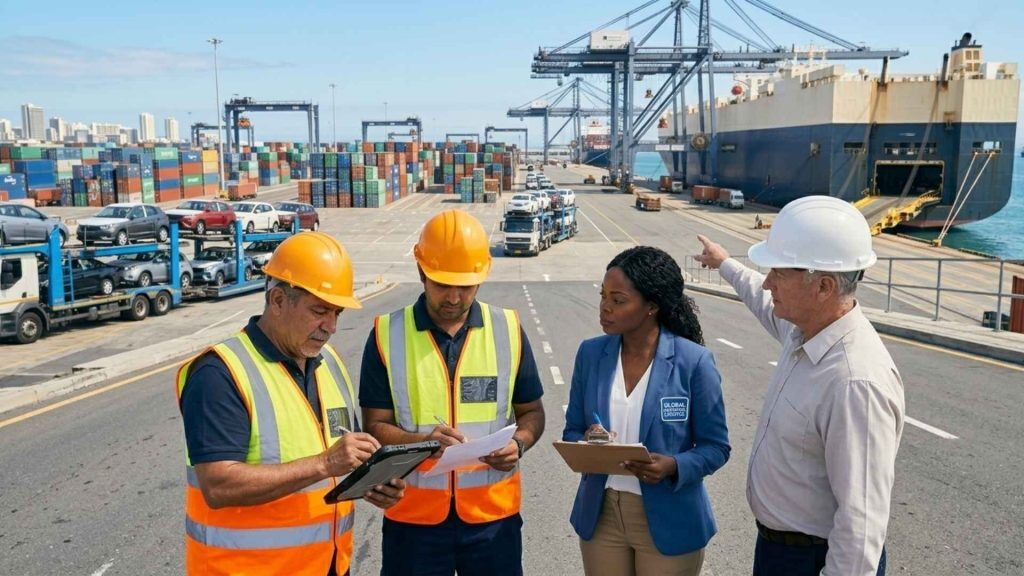
May 2026 Freight Update | Automobile Logistics is entering a more complex phase as Middle East conflict, AI-driven logistics systems, rising insurance costs, and longer transit times reshape how vehicles, parts, and EV components move across global trade lanes.
For importers, exporters, dealers, and automotive supply chain teams, this is no longer just a shipping issue. It is a cost, timing, routing, and risk-management issue.
🔴 The Hormuz Crisis Is Disrupting Global Vehicle Freight
The biggest pressure point this month is the ongoing instability around the Strait of Hormuz. While the route may not be formally closed, operational risk has made it functionally difficult for many vessels to move through safely.
Shipping traffic through the region has reportedly dropped sharply, while major carriers continue diverting vessels around the Cape of Good Hope. For automotive shipping, that means longer transit windows, higher fuel consumption, and more uncertainty in delivery schedules.
May 2026 Logistics Impact Snapshot
| Category | Status | Primary Impact |
|---|---|---|
| Ocean Freight | Critical | Reroutes around Africa and higher rate pressure |
| Air Freight | Volatile | More demand as shippers avoid ocean delays |
| AI Integration | Rapid | Faster rerouting and smarter cost control |
| Auto Parts | Growth | EV parts and aftermarket demand remain strong |
🚢 Rerouting Is Changing Automobile Logistics Timelines
Carriers avoiding high-risk corridors are adding 10–14 days to many shipment plans. That may sound manageable on paper, but in automobile logistics, those extra days can affect dealership inventory, auction timelines, vehicle release, parts availability, and inland transport scheduling.
For businesses importing vehicles or automotive components from Asia, planning through routes such as China to Canada import and India to Canada import now requires stronger buffer planning and better visibility from origin to destination.
Automobile Logistics Pressure Areas in 2026
Vehicle logistics now requires stronger planning across ocean, inland, warehousing, and delivery timelines.
🤖 AI Is Moving Automobile Logistics From Tracking to Decision-Making
AI is no longer just helping logistics teams track shipments. In 2026, agentic AI tools are beginning to support real-time decisions such as rerouting cargo, adjusting delivery plans, comparing risk exposure, and responding to port closures faster.
For automobile logistics, this matters because vehicle shipments often involve multiple moving parts: port handling, inland trucking, documentation, inspection, release timing, and final delivery. When one part shifts, the whole schedule can change.
For shorter inland moves or flexible delivery needs, straight truck services can help support more responsive vehicle parts and automotive freight movement.
🚗 Automotive Importers Are Facing a Double Hit
The automotive sector is dealing with high demand and higher complexity at the same time. EV battery logistics, aftermarket e-commerce parts, vehicle-to-vehicle technology, and safer fleet coordination are pushing the industry forward.
But rising insurance premiums, emergency risk surcharges, longer routes, and limited quote validity are making long-term planning harder. Many forwarders are struggling to hold rates beyond a short window because the market is changing too quickly.
📦 India’s Multimodal Hub Strategy Is Gaining Attention
India’s Dadri Multimodal Hub is being viewed as a potential strategic safe harbor for transshipment and automotive freight routing. As Middle East volatility continues, alternate logistics hubs are becoming more important for importers and exporters trying to avoid unpredictable corridors.
This does not remove risk completely, but it gives automobile logistics teams more options when traditional routes become unstable.
💰 The Financial Pressure Is Hitting Mid-Size Importers Hard
War-risk insurance premiums for Gulf-adjacent shipping have increased sharply. These costs are being pushed to shippers through emergency risk surcharges and higher freight rates.
Spot rates on major corridors are also under pressure, making it harder for automotive businesses to plan landed costs. For mid-size importers, the challenge is not only higher rates. It is the inability to predict how long those rates will hold.
🎯 What Automotive Shippers Should Do Now
Automobile Logistics Action Checklist
- ✅ Add 10–14 days to sensitive transit planning
- ✅ Review war-risk and emergency surcharge exposure before booking
- ✅ Build alternate routing options for Asia-origin vehicle freight
- ✅ Use AI-supported visibility where possible
- ✅ Coordinate inland transport earlier to avoid missed delivery windows
- ✅ Work with experienced automotive freight specialists
Partner With GFFCA for Smarter Automobile Logistics
The risk environment around global vehicle freight is changing quickly. Businesses need more than basic freight booking. They need route planning, documentation support, inland coordination, and automotive logistics expertise.
At GFFCA, we help customers move vehicles, automotive parts, and specialized cargo with practical planning built around real-world freight disruption.
Whether your shipment involves vehicle exports, auto parts, EV components, or inland transport coordination, our automotive shipping services are designed to support smoother movement from origin to destination.
Need support with vehicle shipping or automobile logistics in 2026? Request a quote today and work with a team that understands automotive freight, global disruption, and time-sensitive cargo movement.
💡 Next Focus: EV battery logistics, auto parts routing, AI-driven freight visibility, and safer inland automotive delivery planning.
