

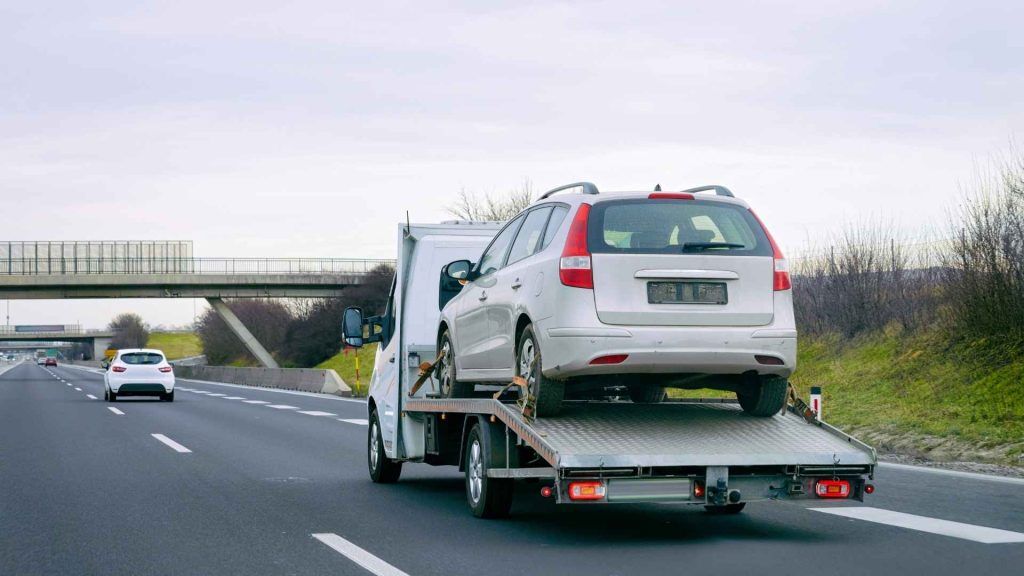
A car built in Mexico. Painted in Tennessee. Inspected in Ohio. Routed through three rail yards. That entire chain of decisions—once managed on spreadsheets and gut instinct—now runs on machines that don’t sleep, don’t forget, and don’t miss a beat.
In 2026, AI isn’t coming to automobile logistics. It’s already running it.
North America moves roughly 17 million new vehicles every year, and the industry that handled that volume with phone calls and rigid lane contracts for three decades is being rebuilt from the ground up.
The question for carriers, OEMs, and dealers isn’t whether to adopt—it’s whether they can afford to be the last ones who didn’t.
Automotive shipping is changing faster than most operators realize, and the data makes that impossible to ignore.
The Old Model Was Quietly Falling Apart
Traditional automobile logistics was held together by institutional knowledge, rigid contracts, and a tolerance for inefficiency that the industry normalized for decades.
Then three things hit at once: EV production complexity, post-COVID supply chain trauma, and e-commerce delivery expectations that made “3-5 business days” feel unacceptable.
Consider what that looks like at scale. A 2% routing improvement across 17 million vehicles isn’t a rounding error—it’s hundreds of millions of dollars in recovered value annually.
Yet most carriers were optimizing routes in 2024 the same way they did in 2004. That gap became impossible to justify once the alternatives existed.
What AI Actually Does in Automobile Logistics (No Hype)
Let’s skip the buzzwords. Here’s where AI is creating measurable impact right now—not in labs, but in deployed operations:
Dynamic Route Optimization
AI models process real-time weather, traffic, rail capacity, port congestion, and dealer inventory simultaneously.
When demand signals shift, loads get rerouted in under 90 seconds. Traditional dispatch couldn’t react to that in 72 hours.
Predictive Damage Detection
Computer vision systems scan vehicles in under 8 minutes per unit—compared to 25-35 minutes for manual inspection.
More critically, they flag 94% of paint and structural defects that human inspectors miss under standard lighting. One major North American OEM reduced transport damage claims by 31% in year one of deployment.
Demand-Driven Inventory Positioning
Instead of shipping based on static dealer orders, AI platforms analyze regional purchase intent—search trends, financing applications, comparable sales velocity—and pre-position inventory accordingly.
The result?
Average lot dwell time dropped from 47 days to 29 days across early adopters in 2025. That’s 18 days of compound fees and floor plan financing costs that simply disappear.
Carrier Capacity Matching
Spot market volatility has been brutal since 2022.
AI-powered freight matching is reducing empty mile runs by 18-22% by dynamically pairing carrier availability with load requirements in real time—something no broker network on phone calls could approximate.
AI in Automobile Logistics — 2026 Numbers:
- Damage claims reduced 31% with AI inspection systems
- Lot dwell time cut from 47 → 29 days with predictive positioning
- Empty mile reduction: 18-22% via AI capacity matching
- Load rerouting speed: under 90 seconds vs. hours manually
- AI automotive logistics market: $4.1B in 2025, projected $9.7B by 2030
The EV Factor: Why AI Became Non-Negotiable
Electric vehicles didn’t just change what gets moved—they changed how everything gets moved. And that shift made AI integration go from a nice-to-have to genuinely urgent.
EVs require battery state-of-charge monitoring during transport.
They have specific compound storage requirements—temperature ranges, charging infrastructure, fire suppression protocols different from ICE vehicles. Some configurations can’t be stacked the same way on multi-level carriers.
Then there’s the reverse supply chain for battery warranty replacements, a layer that barely existed five years ago.
The OEMs who tried to scale EV distribution without AI-native logistics platforms found out the hard way.
Delays, battery condition complaints, and dealer preparation failures weren’t random—they were structural, caused by automobile logistics infrastructure that wasn’t built for EV complexity. AI handles battery monitoring, charge optimization, and EV-specific routing continuously, at a scale no human team could match.
For cross-border EV movements between Canada and the US, integrated inland logistics becomes the critical connector—handling customs documentation, provincial compliance, and multi-jurisdiction routing in one coordinated flow.
What AI Still Can’t Fix (Honest Assessment)
A credible view requires honesty about the gaps. Three problems that AI hasn’t solved yet:
Data quality is the ceiling. An AI system running on incomplete carrier data or stale dealer inventory feeds makes fast, confident decisions based on wrong inputs.
The system doesn’t know it’s wrong—it executes at scale. Fixing data infrastructure is unglamorous, expensive work, and it’s the prerequisite for everything else.
Last-mile stays stubbornly human. AI routes a vehicle to the right compound. Getting it off the lot, through dealer prep, and into a customer’s hands still depends on local carrier relationships and ground-level flexibility that no algorithm has fully solved.
This is why expedited shipping expertise matters for time-critical deliveries—human operational judgment at the final stage is still irreplaceable.
Cross-border complexity spikes fast. The moment automobile logistics crosses from the US into Canada, AI routing hits a wall of customs requirements, provincial permit variations, and bilingual compliance paperwork.
Most platforms handle it inconsistently, which is exactly where specialized freight expertise and AI tools working together beats pure automation.
What the Next 18 Months Look Like
Two developments to watch closely:
Autonomous hauler pilots are expanding on closed highway routes across the US Southwest and Canadian Prairies. Not replacing drivers wholesale—rather, running as hybrid operations that extend driver hours and reduce overnight stops.
Commercial-scale deployment on select long-haul corridors looks likely by late 2026.
Digital twin technology is moving from proof-of-concept to production use. Several Tier 1 automotive carriers now run real-time simulations of their North American network—testing rerouting decisions and disruption scenarios in the digital model before executing in the real world.
The gap between operators with this capability and those without is already showing up in contract wins and customer retention numbers.
The operators who haven’t built the AI layer yet aren’t just missing efficiency gains—they’re offering a materially different service experience compared to those who have. In 2026, customers compare delivery windows, damage rates, and live tracking visibility side by side. That comparison is no longer abstract.
Ready to Move Smarter?
Whether you’re managing fleet distribution, coordinating dealer network logistics, or navigating cross-border automobile logistics between Canada and the US, the right partner makes the difference between a supply chain that keeps up and one that falls behind.
Explore automotive shipping solutions built for the complexity of 2026—and get cross-border routing handled through inland logistics expertise that covers the full Canada-US corridor.
For time-sensitive vehicle moves, expedited shipping solutions ensure your vehicles arrive on the dealer’s timeline—not the carrier’s.
17 million vehicles. Thousands of routes. Billions in transit value. The industry that once ran on clipboards and carrier relationships is now running on machine learning. The only question is which side of that shift you’re on.
