

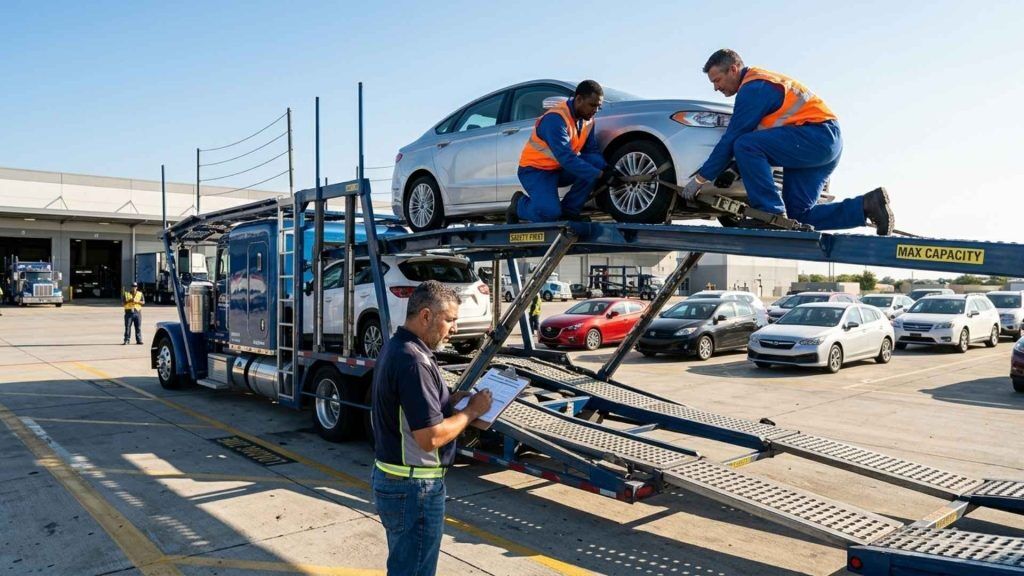
In automobile logistics, every shipment decision comes down to a trade-off. Move faster and you pay more. Save cost and you risk delays. Reduce risk and you may lose speed.
Here’s what most automotive shippers get wrong: they think logistics is just about picking the cheapest transport mode. In reality, it’s about making strategic compromises that align with your business priorities—whether that’s getting vehicles to dealers before a sales surge, protecting high-value inventory, or maintaining profit margins on bulk shipments.
A single wrong decision can cascade into dealer stockouts, margin erosion, or damage claims that wipe out quarterly profits. The companies winning in 2026 understand this isn’t a transport problem. It’s a strategy problem.
What “Strategy” Actually Means in Automobile Logistics
Most people think automobile logistics strategy is just choosing between air, ocean, or ground transport. That’s mode selection, not strategy.
Real logistics strategy includes:
- Route planning – Which corridors minimize handling and risk?
- Timing optimization – When does inventory need to arrive vs when should it ship?
- Cost control – Where can you save without compromising delivery or safety?
- Risk assessment – What’s the probability of damage, delay, or compliance issues?
The strategic question isn’t “What’s the fastest option?” or “What’s the cheapest option?” It’s: “What’s the right compromise given my business goal?”
For a specialized automotive shipping provider, this means understanding your sales cycle, inventory targets, and margin pressures—not just moving metal from Point A to Point B.
The Speed Factor: Why Fast Isn’t Always Best
Speed matters in automobile logistics when:
- Dealers need inventory before a promotional event or seasonal surge
- Customer delivery timelines are contractual (fleet orders, corporate purchases)
- Holding costs at origin exceed premium shipping fees
- Faster sales cycles improve cash flow and inventory turns
But speed comes with trade-offs:
- Premium transport modes (air freight, expedited ground) cost 40-60% more
- Limited capacity during peak seasons forces rate spikes
- Rushed handling increases minor damage risk (scratches, trim issues)
Key Insight: Speed is valuable when the cost of not having inventory exceeds the premium you pay to move it faster. A dealer losing $5,000/day in missed sales will gladly pay $2,000 extra for expedited delivery.
The Cost Factor: When Cheap Becomes Expensive
Cost optimization matters when:
- You’re moving high volumes where per-unit savings compound (100+ vehicles)
- Margins are thin and every dollar affects profitability
- Delivery timelines are flexible and inventory pressure is low
- Market pricing competition forces you to find savings in logistics
But cutting costs shifts risk elsewhere:
- Cheaper ocean routes add 10-15 days vs air freight or premium lanes
- Low-cost carriers may have higher damage rates or less insurance coverage
- Longer transit increases exposure to theft, weather, or port congestion
- Multi-leg routes with more transfers raise handling errors
Key Insight: The “cheapest” option often isn’t. When you factor in potential delays, damage claims, and lost sales opportunities, a $500 savings on transport can create a $5,000 problem downstream.
The Risk Factor: What You Don’t See Until It’s Too Late
Risk in automobile logistics comes in multiple forms, and most shippers underestimate it until they file their first major claim.
Types of risk:
- Physical damage – scratches, dents, broken glass, mechanical issues
- Delays – weather, customs holds, port congestion, carrier capacity issues
- Theft – high-value vehicles, aftermarket parts, electronics
- Compliance failures – documentation errors, tariff misclassification, emissions standards
- Handling errors – improper loading, inadequate securing, multi-transfer damage
Risk increases when you:
- Choose the lowest-cost carrier without vetting their damage history
- Use routes with multiple transfers or non-specialized handlers
- Skip protective measures (enclosed transport, individual tie-downs, GPS tracking)
- Don’t work with providers experienced in value-added automotive services
Key Insight: Reducing risk often increases cost, but the math is simple: paying 15% more for enclosed transport beats a 5% damage rate that costs you 30% in repairs and customer dissatisfaction.
The Trade-Off Triangle: You Can’t Optimize All Three
Here’s the uncomfortable truth about automobile logistics: you cannot maximize speed, minimize cost, and eliminate risk simultaneously. Every decision forces you to prioritize.
The Three-Way Trade-Off
| Trade-Off | What You Gain | What You Sacrifice |
|---|---|---|
| Speed vs Cost | Faster delivery = better inventory availability | Premium rates 40-60% higher than standard |
| Cost vs Risk | Lower transport spend = better margins | Higher damage rates, less insurance, more delays |
| Speed vs Risk | Expedited shipping reduces transit exposure | Rushed handling, limited carrier options, pressure errors |
The best automobile logistics strategy isn’t about avoiding trade-offs—it’s about making the right trade-offs for your specific business situation.
Real-World Scenarios: How Trade-Offs Play Out
Let’s look at three common situations where shippers make different strategic choices:
📦 Scenario 1: Urgent Dealer Demand
Situation: Luxury car dealer needs 15 vehicles for weekend promotion. Current inventory: 3 units.
Decision: Prioritize SPEED
Strategy: Expedited enclosed transport, direct delivery, premium carrier
Outcome: 60% higher cost, but dealer hits sales target and moves $450K in inventory. Transport premium: $12K. Sales generated: $67K profit. ROI: 5.5x
💰 Scenario 2: Bulk Shipment to Distribution Hub
Situation: Importer moving 200 used vehicles from auction to warehousing facility. No immediate sales pressure.
Decision: Prioritize COST
Strategy: Standard open transport, consolidated multi-vehicle carriers, flexible delivery windows
Outcome: 45% cost savings vs expedited. Minor cosmetic damage on 3 vehicles (1.5% rate, within tolerance). Delivery takes 12 days instead of 5. Margin preserved.
🛡️ Scenario 3: High-Value Luxury Fleet
Situation: Moving 8 luxury vehicles (total value $2.4M) for corporate collection. Reputation risk high.
Decision: Prioritize RISK REDUCTION
Strategy: Enclosed transport, GPS tracking, dedicated carriers, full insurance, white-glove handling
Outcome: 80% higher cost than standard. Zero damage, zero delays, zero insurance claims. Client satisfaction: 100%. Repeat business secured. Long-term value >> short-term premium.
How to Choose the Right Strategy for Your Shipment
The right automobile logistics strategy depends on your specific business goal. Here’s a decision framework:
| Your Priority | Optimize For | Accept Trade-Off |
|---|---|---|
| Urgent dealer inventory | ⚡ Speed | Higher cost, potential handling pressure |
| Bulk shipments, flexible timeline | 💰 Cost | Slower transit, minor cosmetic risk acceptable |
| High-value vehicles, reputation risk | 🛡️ Risk Reduction | Premium pricing, potentially slower specialized service |
| International imports with compliance complexity | 🛡️ Risk + Expertise | Higher cost for specialized import/export solutions |
Critical Rule: Your decision should be driven by the business impact of the shipment, not just the transport quote. A $500 savings that creates a $5,000 stockout problem isn’t a savings—it’s a loss.
Factors That Influence Your Strategy Choice
Before choosing a strategy, evaluate these variables:
Shipment Characteristics:
- Volume: 1-2 vehicles vs 50+ vehicles changes your leverage and options
- Vehicle type: New cars, used cars, exotics, classic vehicles, commercial fleet
- Value: $15K economy sedan vs $150K luxury vehicle changes risk tolerance
Business Context:
- Destination urgency: Dealer stockout vs routine replenishment
- Market demand: Peak season vs slow period
- Inventory levels: Critical shortage vs adequate buffer stock
- Margin pressure: High-margin specialty vehicles vs commodity volume plays
External Factors:
- Seasonality: Winter weather increases delays; summer increases demand for carriers
- Geopolitical risks: 2026 trade tensions affecting certain lanes (see: automotive shipping complexities)
- Regulatory changes: New emissions standards, customs requirements, cross-border rules
How the Right Logistics Partner Balances Trade-Offs
This is where most DIY shippers struggle. They see the three options—speed, cost, risk—and make a guess. Strategic logistics providers do something different.
What experienced automobile logistics partners bring:
1. Route Optimization Intelligence
- Identifying lanes where speed doesn’t cost premium (backhaul opportunities, underutilized routes)
- Avoiding high-risk corridors (theft hotspots, damage-prone handlers, congested ports)
- Leveraging cross-docking and consolidation to reduce per-unit costs without sacrificing speed
2. Carrier Selection Expertise
- Vetting carriers based on damage rates, insurance coverage, and specialized automotive experience
- Negotiating volume rates that lower cost without compromising service quality
- Matching your specific vehicle type to carriers with proven track records
3. Risk Management Systems
- GPS tracking and real-time visibility to mitigate theft and delay risks
- Proper insurance coverage aligned with vehicle value and customer requirements
- Compliance expertise in import brokerage services Canada and cross-border automotive regulations
4. Strategic Planning Support
- Helping you understand when to prioritize speed vs cost based on inventory economics
- Scenario modeling: “What if we ship 5 days later but save $8K?”
- Transparent cost breakdowns so you see exactly where money goes
The Value Proposition: A strategic automobile logistics partner doesn’t just move vehicles. They help you make better decisions that align logistics spend with business outcomes.
What You Should Do Right Now
If you’re shipping automobiles in 2026, here’s your action plan:
Start by Defining Your Priority
- For this shipment, is your primary goal speed, cost, or risk reduction?
- What’s the business impact if you get it wrong? (stockout cost, damage claim, missed sales)
Next, Evaluate Shipment Urgency
- Do you have flexibility in delivery timing, or is this a hard deadline?
- What’s the cost of each additional day in transit? (holding cost, lost sales, customer penalties)
Then, Understand the Trade-Offs
- Request quotes for multiple service levels (economy, standard, expedited)
- Calculate the total cost including potential delays, damage, and business impact—not just the transport quote
Finally, Work with an Experienced Provider
- Choose partners with automotive-specific expertise and proven damage rates
- Look for providers offering value-added services like inspection, storage, and delivery coordination
- Verify they understand Import/Export Solutions and compliance requirements for your lanes
Why the Right Partner Makes All the Difference
At GFFCA, we don’t just move vehicles. We help you make smarter strategic decisions that balance speed, cost, and risk based on your specific business situation.
Our approach to automobile logistics strategy:
- No one-size-fits-all solutions – We customize based on your volume, vehicle type, urgency, and margin requirements
- Transparent trade-off analysis – We show you exactly what you gain and sacrifice with each option
- Proven carrier network – Vetted partners with automotive-specific experience and low damage rates
- Risk management expertise – From GPS tracking to insurance optimization to customs compliance
- End-to-end visibility – You always know where your vehicles are and when they’ll arrive
Whether you’re a dealer needing urgent inventory, an exporter moving bulk shipments, or an OEM managing high-value fleet logistics, we help you optimize the right variable for your business—not just pick the cheapest quote.
Ready to stop guessing and start strategizing? Request a customized automobile logistics quote and let us show you how the right balance of speed, cost, and risk can improve your bottom line.
Because in 2026, automobile logistics isn’t about moving metal—it’s about making decisions that drive profitability.
